





The Home button at the end of each topic takes you to the Home page.

The Menu button provides access to the individual topics.

The Resources button provides a list of useful links.

The Switch Language button lets you switch to a different language.

The Close button ends your training session and closes the course window.












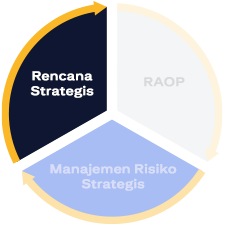
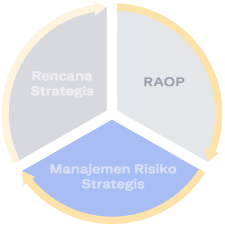
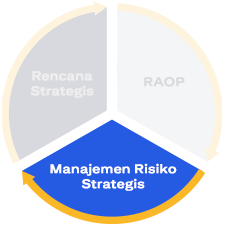
Strategic Risk Management is closely tied to the Strategic Planning Process.
To proceed, select each area to learn more.
go to next button
go to next button
go to next button


Economic Environment Risk: The risk that inflation, rate hikes, and potential recession result in a reduction in revenue-generating activities.
Key Indicator Examples: GDP growth, unemployment rate, CPI inflation, etc.

Industry & Competition Risk: The risk that market trends or new entrants result in a reduction in revenue-generating activities or wallet share.
Key Indicator Examples: Banking sector performance (indices), Banking CDS spreads, Citi vs Peer valuation comparisons, etc.

Environmental Risk: The risks related to climate transition, be it in the form of financing, a failure to meet our net-zero climate commitments, or losing out on green financing opportunities. Failure to meet our net-zero commitments could also result in customer attrition or a reduction of wallet share.
Key Indicator Examples: ESG scores, Citi’s exposure to climate-vulnerable industries, etc.





We have constructed a taxonomy to organize the terms we use to describe Strategic Risk consistently and transparently across the firm. This Strategic Risk Taxonomy provides tangible and robust guidance for identifying and challenging Strategic Risk statements.
L0 and L1 represents the thematic, highest-level risk. L2 risks are the granular Strategic Risk sub-categories. The accompanying descriptions provide a non-comprehensive list of indicators and potential factors that influence Strategic Risk.


Quantitative methodologies for Strategic Risk include:
These review stress scenarios to assess risks, in line with the Enterprise Risk Identification Policy.

Not all Strategic Risks are quantifiable and will rely on subject matter expertise to assess the exposure. Qualitative methodologies used in Strategic Risk identification include SWOT analysis, which is reviewed in more detail in the next topic.
Additional sources of information that must be considered in order to estimate qualitative risk severity include:
(Note that this is driven by the nature of business activities and will require subject-matter inputs, i.e., the list will look different for different business units.)

Our Materiality Threshold is USD 600MM and Top Risk Threshold is USD 1.2BN. In this context, a risk may still be considered material even if it does not exceed the threshold on a quantitative assessment. Qualitative factors may make the risk significant enough to be considered a Material/Top Risk.
If you are in doubt, contact your risk partner to help you with the assessment.














The RAS is an overarching statement with a Low/Moderate/High indicator for how much risk the firm is willing to assume.
Citi’s current appetite for Strategic Risk is Moderate.

The Strategic Risk Chapter must:
As part of the annual review, Strategic Risk Appetite Key Indicators, and associated thresholds that align to and support the qualitative statements in the RAS, must be reviewed and included in the approval, as applicable.
Concentration risk relates to the risks arising from being overly concentrated in one sector, region, or client – this could lead to large losses should that sector experience a downturn, that region experience a shock, or that client decide to terminate their relationship with our bank. Although some sectors do outperform others at times, it is important to diversify our revenue sources to protect against concentration risk.
The Strategic Risk Policy requires that the development and execution of the Strategic and Operating Plan to be consistent with Citigroup’s and CBNA’s respective risks appetites, which includes enterprise-level risk appetite limits and relevant concentration risk limits.
Concentration Risk reports are also used as inputs in the Risk Assessment of the Plan (RAOP) process.
Enterprise Risk Management reviews and challenges the risk assessments from the perspective of the enterprise, including Concentration Risk.






The Strategic Risk Appetite is assessed with Strategic Risk Appetite Key Indicators. Key Risk Indicators (KRIs) are a broader, more dynamic set of measures to assess the Strategic Risk environment. External-facing indicators are beyond Citi’s control (e.g., inflation) but we need to know in what way these parameters are moving.
To proceed, select the arrow on the right to learn more.



KRIs must be identified, reviewed and/or developed to help monitor for Strategic Risks in line with the Enterprise Risk Identification Policy and Key Risk Indicator Standard.
In some cases, KRIs may not have limits or thresholds, e.g. GDP growth, but need to be assessed as they might indicate a change in risk profile.
go to next button
It is 1LOD’s responsibility to review or establish Strategic Risk KRIs, monitor and, where appropriate, review, or establish boundaries at the business level in line with the Enterprise Risk Identification Policy.
2LOD will also establish KRIs to measure the Strategic Risk profile at the enterprise level, including monitoring Top Risks.
go to next button
Citi has committed to net zero greenhouse gas emissions financing by 2050. This commitment presents a Strategic Risk, aligned with our Risk Taxonomy node of Environmental Risk.
A good Key Risk Indicator in this example would focus on revenue concentrations in climate-vulnerable industries. For instance, we could monitor revenue concentration in the Oil and Gas industry to assess whether our risk exposure is increasing or decreasing.
go to next button







To proceed, select each image to learn more.

Risk Identification
Risk Identification is a standalone enterprise-wide program under ERM that Strategic Risk aligns with. Policy documents that govern this process are available on the Policy Directory and are also included in the Resources section of this training.

Risk Appetite and Limits & Threshold Management
Strategic Risk also links to the Risk Appetite and Limits & Threshold Management programs. Policy documents that govern these processes are available on the Policy Directory and are also included in the Resources section of this training.

Strategic Risk Taxonomy and Definition
The Strategic Risk definition and Risk Taxonomy must be maintained and kept current. Together with all other L0 Risk Categories these are subject to annual review, revision, and approval in line with the applicable enterprise-wide governance.

Management Control Assessment
Management Control Assessment (MCA) enables a robust internal control environment and control governance. Across 1LOD and 2LOD, there must be controls in place to ensure effective reduction and mitigation of key risk.



Strategic risk differs from other types of risk as it relates to the earnings streams of the firm rather than specific losses, requires both qualitative and quantitative inputs, and is better measured in terms of thresholds with indicators rather than metrics with limits.
The Strategic Risk Taxonomy provides tangible and robust guidance for identifying and challenging Strategic Risk statements. Insight into Strategic Risk can come from a variety of sources.
Quantitative methods used to assess Strategic Risk include CCAR and QMMF. Qualitative methods include SWOT analysis and various additional sources of information.
SWOT analyses can inform the capture of risk statements in the MRI by the respective business lines.




Which of the following accurately describes Strategic Risk?
Select the best response from the four options and then select Submit.
Please use the Space key only when selecting a radio option with the keyboard. The Enter key is not fully supported. If the Enter key has been used to select a radio option, please use the Escape key. Then you will be able to use the Space key again to select a radio option.
Strategic Risk is the risk of a sustained impact (not episodic impact) to the firm’s core strategic objectives, arising from the external factors affecting the firm’s operating environment as well as factors associated with defining and executing the strategy. It is not a category for risks that cannot be categorized under another risk type.
Refer to Why Is Strategic Risk Important? for more information.
Refer to Why Is Strategic Risk Important? for more information.
That answer is correct.
That answer is not correct.
Refer to Why Is Strategic Risk Important? for more information.
That answer is not correct.
Refer to Why Is Strategic Risk Important? for more information.
That answer is not correct.
Refer to Why Is Strategic Risk Important? for more information.
That answer is correct.
Strategic Risk arises from external factors affecting the firm’s operating environment as well as factors associated with defining and executing the strategy.
That answer is not correct.
Refer to Why Is Strategic Risk Important? for more information.
That answer is not correct.
Refer to Why Is Strategic Risk Important? for more information.
Which of these statements is true regarding Strategic Risk?
Select the best response from the four options and then select Submit.
Please use the Space key only when selecting a radio option with the keyboard. The Enter key is not fully supported. If the Enter key has been used to select a radio option, please use the Escape key. Then you will be able to use the Space key again to select a radio option.
Citi will not be able to directly influence external indicators, such as GDP. Creating thresholds is therefore not always feasible. Assessing Strategic Risk requires both qualitative and quantitative inputs. Strategic Risk is closely tied to the Strategic Planning Process and is an L0 Risk Category.
Refer to Quarterly Strategic Risk Appetite Assessment for more information.
Refer to Quarterly Strategic Risk Appetite Assessment for more information.
That answer is correct.
That answer is not correct.
Refer to Quarterly Strategic Risk Appetite Assessment for more information.
That answer is not correct.
Refer to Quarterly Strategic Risk Appetite Assessment for more information.
That answer is correct.
Some indicators that track external factors may not have thresholds associated with them.
That answer is not correct.
Refer to Quarterly Strategic Risk Appetite Assessment for more information.
That answer is not correct.
Refer to Quarterly Strategic Risk Appetite Assessment for more information.
That answer is not correct.
Refer to Quarterly Strategic Risk Appetite Assessment for more information.
Which of the following is a quantitative methodology in Strategic Risk identification?
Select the best response from the four options and then select Submit.
Please use the Space key only when selecting a radio option with the keyboard. The Enter key is not fully supported. If the Enter key has been used to select a radio option, please use the Escape key. Then you will be able to use the Space key again to select a radio option.
SWOT analysis is a qualitative methodology used in Strategic Risk identification. RAOP is a source of insight but not a measurement of Strategic Risk.
Refer to Strategic Risk Identification Process for more information.
Refer to Strategic Risk Identification Process for more information.
That answer is correct.
That answer is not correct.
Refer to Strategic Risk Identification Process for more information.
That answer is not correct.
Refer to Strategic Risk Identification Process for more information.
That answer is correct.
Comprehensive Capital Analysis and Review (CCAR) is a quantitative methodology used in Strategic Risk identification.
That answer is not correct.
Refer to Strategic Risk Identification Process for more information.
That answer is not correct.
Refer to Strategic Risk Identification Process for more information.
That answer is not correct.
Refer to Strategic Risk Identification Process for more information.
Why is Strategic Risk management important for Citi?
Select the best response from the four options and then select Submit.
Please use the Space key only when selecting a radio option with the keyboard. The Enter key is not fully supported. If the Enter key has been used to select a radio option, please use the Escape key. Then you will be able to use the Space key again to select a radio option.
Strategic Risk is a relatively new Risk Category. Strategic Risk is an enterprise-wide risk category. Strategic Risk is the risk of a sustained impact (not episodic impact) to the firm’s core strategic objectives arising from the external factors affecting the firm’s operating environment.
Refer to Why Is Strategic Risk Important? for more information.
Refer to Why Is Strategic Risk Important? for more information.
That answer is correct.
That answer is not correct.
Refer to Why Is Strategic Risk Important? for more information.
That answer is not correct.
Refer to Why Is Strategic Risk Important? for more information.
That answer is not correct.
Refer to Why Is Strategic Risk Important? for more information.
That answer is not correct.
Refer to Why Is Strategic Risk Important? for more information.
That answer is not correct.
Refer to Why Is Strategic Risk Important? for more information.
That answer is correct.
Failure to manage Strategic Risk could pose a real threat to Citi.
SWOT analyses may inform the capture of risk statements in which of the following?
Select the best response from the four options and then select Submit.
Please use the Space key only when selecting a radio option with the keyboard. The Enter key is not fully supported. If the Enter key has been used to select a radio option, please use the Escape key. Then you will be able to use the Space key again to select a radio option.
SWOT analyses are a source of insight that informs the capture of risk statements in the MRI. The strategic and financial planning process also includes a SWOT analysis.
Refer to SWOT Analysis for more information.
Refer to SWOT Analysis for more information.
That answer is correct.
That answer is not correct.
Refer to SWOT Analysis for more information.
That answer is not correct.
Refer to SWOT Analysis for more information.
That answer is not correct.
Refer to SWOT Analysis for more information.
That answer is not correct.
Refer to SWOT Analysis for more information.
That answer is correct.
SWOT analyses may inform the capture of risk statements in the Material Risk Inventory (MRI).
That answer is not correct.
Refer to SWOT Analysis for more information.
How is Strategic Risk Appetite measured?
Select the best response from the four options and then select Submit.
Please use the Space key only when selecting a radio option with the keyboard. The Enter key is not fully supported. If the Enter key has been used to select a radio option, please use the Escape key. Then you will be able to use the Space key again to select a radio option.
The Strategic Risk Chapter includes supporting Strategic Risk Appetite Key Indicators and their associated thresholds that are used to monitor Strategic Risk appetite.
Refer to Strategic Risk Appetite Statements for more information.
Refer to Strategic Risk Appetite Statements for more information.
That answer is correct.
That answer is not correct.
Refer to Strategic Risk Appetite Statements for more information.
That answer is not correct.
Refer to Strategic Risk Appetite Statements for more information.
That answer is not correct.
Refer to Strategic Risk Appetite Statements for more information.
That answer is correct.
Strategic Risk Appetite is measured using Key Risk Indicators.
That answer is not correct.
Refer to Strategic Risk Appetite Statements for more information.
That answer is not correct.
Refer to Strategic Risk Appetite Statements for more information.
Following the quarterly risk appetite assessment, who must determine whether the firm is inside or outside of Strategic Risk Appetite?
Select the best response from the four options and then select Submit.
Please use the Space key only when selecting a radio option with the keyboard. The Enter key is not fully supported. If the Enter key has been used to select a radio option, please use the Escape key. Then you will be able to use the Space key again to select a radio option.
The GSRC must determine whether the firm is inside or outside of Strategic Risk Appetite based on the assessment of Strategic Risk Appetite Key Indicators and the firm’s performance, and risk drivers.
Refer to Quarterly Strategic Risk Appetite Assessment for more information.
Refer to Quarterly Strategic Risk Appetite Assessment for more information.
That answer is correct.
That answer is not correct.
Refer to Quarterly Strategic Risk Appetite Assessment for more information.
That answer is not correct.
Refer to Quarterly Strategic Risk Appetite Assessment for more information.
That answer is correct.
The Global Strategic Risk Committee (GSRC) must determine whether the firm is inside or outside of Strategic Risk Appetite.
That answer is not correct.
Refer to Quarterly Strategic Risk Appetite Assessment for more information.
That answer is not correct.
Refer to Quarterly Strategic Risk Appetite Assessment for more information.
That answer is not correct.
Refer to Quarterly Strategic Risk Appetite Assessment for more information.
Whose responsibility is it to establish Strategic Risk Key Risk indicators (KRIs) at the business level?
Select the best response from the four options and then select Submit.
Please use the Space key only when selecting a radio option with the keyboard. The Enter key is not fully supported. If the Enter key has been used to select a radio option, please use the Escape key. Then you will be able to use the Space key again to select a radio option.
It is 1LOD’s responsibility to review or establish Strategic Risk KRIs, monitor and, where appropriate, review or establish boundaries at the business level in line with the Enterprise Risk Identification Policy. 2LOD may also establish KRIs to measure the Strategic Risk profile at the enterprise level.
Refer to Quarterly Strategic Risk Appetite Assessment for more information.
Refer to Quarterly Strategic Risk Appetite Assessment for more information.
That answer is correct.
That answer is not correct.
Refer to Quarterly Strategic Risk Appetite Assessment for more information.
That answer is not correct.
Refer to Quarterly Strategic Risk Appetite Assessment for more information.
That answer is not correct.
Refer to Quarterly Strategic Risk Appetite Assessment for more information.
That answer is not correct.
Refer to Quarterly Strategic Risk Appetite Assessment for more information.
That answer is not correct.
Refer to Quarterly Strategic Risk Appetite Assessment for more information.
That answer is correct.
Refer to Quarterly Strategic Risk Appetite Assessment for more information.
Per the Strategic Risk definition, how are impacts to the firm’s core strategic objectives measured?
Select the best response from the four options and then select Submit.
Please use the Space key only when selecting a radio option with the keyboard. The Enter key is not fully supported. If the Enter key has been used to select a radio option, please use the Escape key. Then you will be able to use the Space key again to select a radio option.
Anticipated earnings, market capitalization, or capital can be used to measure impacts to the firm’s core strategic objectives.
Refer to Welcome to Strategic Risk for more information.
Refer to Welcome to Strategic Risk for more information.
That answer is correct.
That answer is not correct.
Refer to Welcome to Strategic Risk for more information.
That answer is not correct.
Refer to Welcome to Strategic Risk for more information.
That answer is not correct.
Refer to Welcome to Strategic Risk for more information.
That answer is not correct.
Refer to Welcome to Strategic Risk for more information.
That answer is correct.
Impacts to the firm’s core strategic objectives are measured by anticipated earnings, market capitalization, or capital.
That answer is not correct.
Refer to Welcome to Strategic Risk for more information.
Which of the following firm-wide processes is NOT linked to Strategic Risk?
Select the best response from the four options and then select Submit.
Please use the Space key only when selecting a radio option with the keyboard. The Enter key is not fully supported. If the Enter key has been used to select a radio option, please use the Escape key. Then you will be able to use the Space key again to select a radio option.
Risk Identification is a standalone enterprise-wide program under ERM that Strategic Risk aligns with. Strategic Risk also links to the Risk Appetite and Limits & Threshold Management programs. Requirements of the Strategic Risk Policy must be included in the relevant MCA.
Refer to Linkages to Other Firm-wide Processes for more information.
Refer to Linkages to Other Firm-wide Processes for more information.
That answer is correct.
That answer is not correct.
Refer to Linkages to Other Firm-wide Processes for more information.
That answer is not correct.
Refer to Linkages to Other Firm-wide Processes for more information.
That answer is not correct.
Refer to Linkages to Other Firm-wide Processes for more information.
That answer is not correct.
Refer to Linkages to Other Firm-wide Processes for more information.
That answer is not correct.
Refer to Linkages to Other Firm-wide Processes for more information.
That answer is correct.
Information Technology is not linked to Strategic Risk.


go to close menu button
go to close button