
0%
 

Welcome

Course Navigation Tips

The Home button at the end of each topic takes you to the Home page.

The Menu button provides access to the individual topics.

The Resources button provides a list of useful links.

The Switch Language button lets you switch to a different language.

The Close button ends your training session and closes the course window.
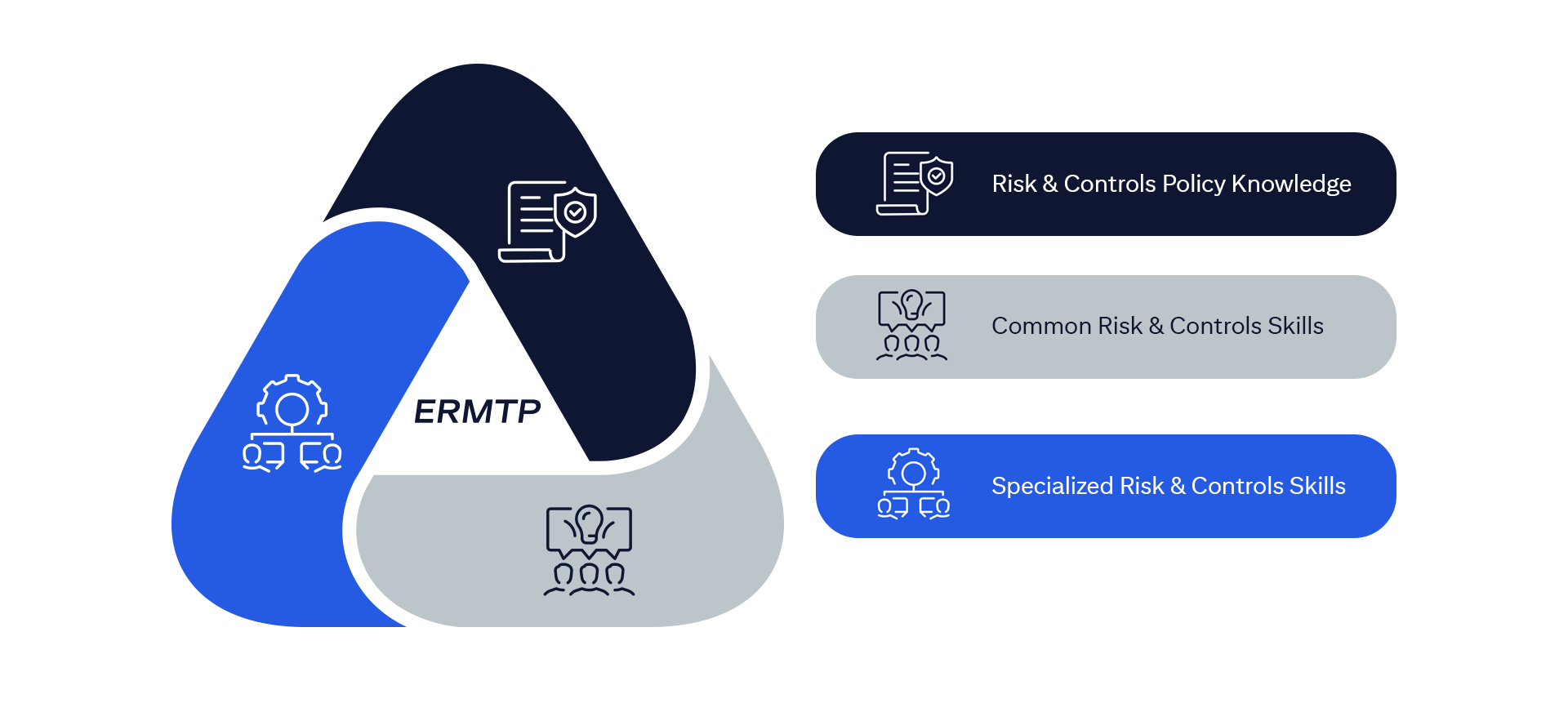
Citi’s Enterprise Risk Management Training Program

Why This?

Citi’s culture and values are at the heart of how business is conducted. A strong risk and control environment is a key enabler of Citi’s culture of excellence.

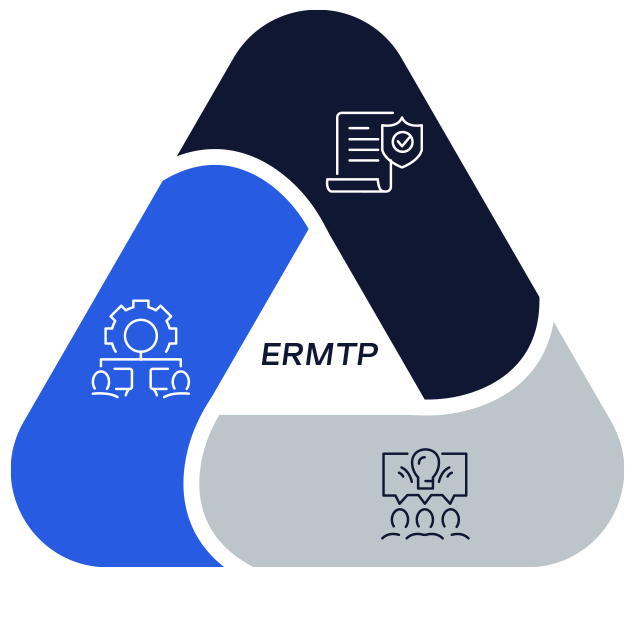
This intermediate course is part of Citi’s Enterprise Risk Management Training Program (ERMTP). ERMTP is a series of courses which will build your understanding of your risk and control responsibilities.

Why Now?

Citi has a standard framework for managing risk. As part of Citi's Enterprise Risk Management Framework (ERMF) supporting capabilities, we are committed to equipping employees with knowledge to carry out day-to-day risk and control responsibilities.

Why Us?

Managing risk is everyone’s job at Citi. We are all risk managers. Risk is inherent to Citi’s business and cannot be avoided. Everyone must be vigilant and manage risk with consistency, and accountability including compliance with applicable laws and regulations.

The Enterprise Risk Management Framework (ERMF) is Citi’s standard for managing risk.

Everyone is responsible for escalating risks and concerns, and Citi provides an environment where this can be done without fear of retribution.

It is your responsibility to understand your role as it relates to managing risk, taking complete ownership of your actions, and supporting Citi in identifying and managing risk every day.

Course Objectives

After completing this course, you will be able to:

  • Define Reputation Risk at Citi
  • Describe how Citi identifies potential Reputation Risk events
  • Identify the steps to determine if an event should be referred for assessment
  • Explain how to measure Reputation Risk
  • Recall how Reputation Risk governance is managed

This training will take approximately 25 minutes to complete.

The course is divided into seven topics and an end-of-course assessment. After completing the training content, you must score 80% or higher in the assessment to receive credit for this course.

Coming Next

Now that you’ve seen what this course will cover, let's examine a real-life example that emphasizes the importance of effective Reputation Risk Management for Citi.

Why Reputation Risk Management Matters

Bank Misconduct Example

One of the largest banks in the United States provides a notable example of Reputation Risk following widespread misconduct.

Select Play to learn more.

Once the video has completed, use the tab key to navigate to the next item.

 

Impact on Reputation

Negative perceptions can severely harm a company’s reputation, leading to loss of trust, brand damage, and financial consequences.

Even after compensating customers and implementing reforms, this risk event underscores the critical need for ethical conduct and robust oversight to maintain public confidence. The misconduct severely damaged Wells Fargo’s reputation.

To proceed, select the arrow on the right to learn more about the impact.


Customer Trust

Trust in Wells Fargo plummeted as customers felt betrayed by its unethical practices.

Many customers closed their accounts, resulting in a direct financial impact.


Legal and Regulatory Consequences

The bank faced numerous fines and penalties from regulators.

For example, the Consumer Financial Protection Bureau (CFPB) imposed a $100 million fine. Additionally, Wells Fargo was fined $35 million from the Office of the Comptroller of the Currency and $50 million from the City and County of Los Angeles.

The bank’s practices were subjected to intense scrutiny by federal and state authorities.


Executive Resignations

Key executives resigned in the wake of the scandal.

This leadership shakeup highlighted the severity of the crisis and the need for a cultural overhaul within the organization.


Stock Performance

The bank’s stock price suffered as investors reacted to the news.

The financial markets viewed the scandal as a significant risk factor, reflecting concerns about the bank’s long-term stability and profitability.


Media Coverage

The extensive media coverage further damaged the bank’s reputation.

Negative headlines and ongoing investigations kept the issue in the public eye, prolonging the reputational damage.


Conclusion

The Reputation Risk faced by Wells Fargo serves as a cautionary tale for businesses across industries.

It underscores the importance of ethical practices, strong internal controls and a corporate culture that prioritizes customer trust and regulatory compliance.

While the bank has made strides in addressing the damage, the scandal’s long-term impact on its reputation highlights the lasting effects of Reputation Risk.

Businesses must remain vigilant and proactive in managing Reputation Risk to maintain trust and credibility in an increasingly scrutinized marketplace.

Note: The information sources for this Bank Misconduct example can be found in the Resources section of this course.


Coming Next

Now that you’ve reviewed why effective Reputation Risk Management matters, let’s examine how Citi defines Reputation Risk and what it means for Citi.

Defining and Understanding Reputation Risk

Defining and Understanding Reputation Risk

Everyone has a role to play in performing their responsibilities as a risk manager to protect clients and the Bank. Since we all represent the firm, we are all responsible for its reputation.

Effective Reputation Risk Management involves proactive measures and sound governance. To operate within its Reputation Risk appetite, Citi promotes the early identification, referral, and active management of issues as they arise.

To identify, manage, assess, refer, and proactively manage Reputation Risk, we must first understand what Reputation Risk is for Citi.

To proceed, select each question to learn more.


How does Citi define Reputation Risk?

Reputation Risk is the risk to Citi’s current or projected financial condition and resilience resulting from negative opinions held by key stakeholders as stated in the Reputation Risk Policy.

The Reputation Risk Policy covers the Reputation Risk Framework for Citi and describes how Reputation Risks are managed and governed in a consistent, repeatable and controlled manner.

The Policy is put forth and managed by Independent Reputation Risk Management (IRRM), and any Reputation Risk related new or updated documents or metrics require approval from the Head of IRRM.

What causes Reputation Risk?

Reputation Risk can arise from, or exist in combination with, all other key risks (Compliance, Credit, Liquidity, Strategic, Operational, and Market). It can also arise from:

  • A failure to consider the long-term impacts of business decisions on stakeholders
  • Primary risk management, operational, or technology failures that impact client experience or stakeholders’ perception

For example, a new product or initiative that receives poor feedback from customers may cause:

  • Impacted customers to submit formal complaints
  • News outlets to release publications about the event that could deter new clients from banking with Citi

What are the consequences of failing to proactively manage Reputation Risk?

Failing to proactively manage Reputation Risk may impair Citi’s financial condition or its competitiveness by affecting its ability to establish or maintain relationships or services.

Reputation Risk is becoming increasingly more important as the customer base and key stakeholders are connected through accessible media and news outlets.

Social media facilitates the rapid and widespread dissemination of information, including negative stories or criticisms. Within hours, a single adverse incident can go viral and reach an international audience.

Lastly, failing to uphold minimum standards for management of Reputation Risk as outlined in the Office of the Comptroller of the Currency (OCC) Guidelines Establishing Heightened Standards for Certain Large Insured National Bank, Insured Federal Savings Associations and Insured Federal Branches; Integration of Regulation may result in regulatory scrutiny causing negative stakeholder perception.


How Does Citi Manage and Assess Reputation Risk?

Citi’s Lines of Defense (LOD) Model is a critical component of Citi’s strong risk management system and defines the key roles and responsibilities for managing Reputation Risk across Citi.

This active management approach includes assessment of Reputation Risk through a variety of risk management and business activities, including but not limited to:

  • Reputation Risk Appetite Assessment;
  • New activities;
  • Client industries;
  • Customer base;
  • Legal entity changes;
  • Customer dissatisfaction and negative media sentiment;
  • Regulatory opinion and requirements;
  • Internal and external risk events; and
  • Negative stakeholder perception.

For more information on roles and responsibilities, please refer to the Lines of Defense (LOD) Model.

Citi’s Reputation Risk Key Stakeholders

At a basic level, assessing Reputation Risk must consider key stakeholders and how their perception impacts Citi’s Reputation Risk.

For each stakeholder type, Reputation Risk Management must also consider the minimum requirements for an event to negatively impact those stakeholders’ perception of Citi.

To proceed, select each key stakeholder to learn more about them.

Customer

As a Citi Customer, I obtain products and services from US Personal Banking, Wealth, and Legacy Franchises businesses.

go to next button

Clients

As a Client, I am an entity recognized by Citi as required by applicable laws and regulation(s).

go to next button

Regulator

As a Regulator, I have supervisory authority to engage with, or provide oversight of, the financial services industry.

go to next button

Employee

I am currently employed at Citi. I must always safeguard my personal reputation and the perception of myself and Citi by key stakeholders.

return to this button

General Public

As a member of the general public, I may or may not have a relationship with Citi and the media who report on Citi, whether in traditional or emerging (social) methods.

return to this button

Investor

As an investor, I commit capital in exchange for Citi common/preferred stock or bonds with the expectation of receiving financial returns.

return to this button

Other Stakeholders

I am an individual or part of a group with an interest in Citi’s business activities and their potential positive or negative impacts on society and the planet.

I could be any of the following:

  • Non-Governmental Oganizations (NGOs) (including consumer advocacy or civil rights groups, global or local human rights or environmental organizations or other advocacy organizations from across the political spectrum)
  • Policy makers and Government Officials
  • Multilateral organizations
  • Investor or philanthropy-backed advocacy initiatives, etc.

return to this button

Image of computer screen depicting charts and graphs
1
2
3
4
5
6
7

Coming Next

Now that we have defined Reputation Risk, let’s review how to identify potential issues and refer them for assessment.

Reputation Risk Identification and Referral

Your Scheduled Meetings

Everyone at Citi must think about identifying Reputation Risk in the same way. Some of the questions you may think about include:

  • How would the public feel about Citi, as a global financial services provider, being associated with negative media arising from key environmental or social issues?
  • How would our investors feel if we received regulatory scrutiny, and our stock price decreased after a negative regulatory finding?
  • How would our ability to grow be diminished if we were no longer a financial institution with a positive reputation?

Let's say you have three meetings scheduled today. Each meeting may include potential Reputation Risk exposure for Citi.

Please note: The scenarios provided in this course might not include specific details on what you do on the job, but the concepts still apply to everyone.

To proceed, select each meeting for a preview of the activities to be discussed. Consider how these activities might be perceived negatively.

Unethical Testing

Unethical Testing

Citi receives an application to onboard a client in the bio-health and bio-cosmetic space.

Hazardous Emissions

Hazardous Emissions

Citi receives an application to participate in a loan funding for a large corporation known for hazardous emissions.

Online Gambling

Online Gambling

You are onboarding a new client whose primary activities include online gambling.

Tools for Identifying Reputation Risk

Considering the highly subjective nature of Reputation Risk, how can you confidently make decisions during each interaction to determine if the activities present anything material enough to impact Citi?

The Reputation Risk Referral Procedure provides tools for determining the referral pathway, including the Reputation Risk Evaluation Guidance and Reputation Risk High-Risk List. These tools can be used as guidance for identifying Reputation Risks and determining next steps.

If at any time you are unsure if an event is material or requires further review, each business has In-Business Reputation Risk Officers (IBRROs) to provide expertise and guidance on next steps.

Reputation Risk Evaluation Guidance

The Reputation Risk Evaluation Guidance incudes five questions that can be used as baseline guidance to help determine if the transaction or event presents anything material enough to impact:

  • Financial condition risk; or
  • Citi’s ability to maintain existing business or acquire new business.

These questions will help you determine if a referral to an IBRRO is required. It’s important to note that although you may answer “yes” to more than one question, the important step is making the referral.

To proceed, select each question to learn more.

Question One
Question Two
Question Three
Question Four
Question Five

Question One

Has the referral been recommended by a Business, Geographical area, or a control or support function?

*This question is relevant if another Business, Geographical area or a control or support function expresses concern for potential Reputation Risk and recommends a referral to In-Business Reputation Risk Management.

go to next button

Question Two

Might this customer/client, activity, transaction, or issue be perceived as failing to meet any of the three tests of our Mission and Value Proposition?

  • Is it in our clients’ interests?
  • Does it create economic value?
  • Is it systemically responsible?

go to next button

Question Three

Might this customer/client, activity, transaction, or issue diminish our standing in the eyes of any of our core stakeholders (Customers, Clients, Regulators, Employees, Investors, General Public, Other Stakeholders (e.g., NGOs))?

go to next button

Question Four

Might the customer/client, activity, transaction, or issue pose Reputation Risk which could affect the firm’s ability to establish new relationships or continue servicing existing relationships?

go to next button

Question Five

Does the customer/client, activity, transaction, or issue involve:

go to next button

Check Your Understanding - Unethical Testing

The following scenarios will help you think through the Reputation Risk Evaluation Guidance or Reputation Risk High-Risk List for potential events you may come across.

Here's a summary of your first meeting discussion:

Citi receives an application to onboard a client in the bio-health and bio-cosmetic space. The client is a well-known skincare producer that brings to the market ultra high-tech cosmetics. It is also known that this client does extensive animal testing in their labs, and they do not disclose their testing data clearly to oversight agencies.

Which one of the following is the correct next step as outlined by the Reputation Risk Evaluation Guidance?

Select the best response from the four options and then select Submit.

Please use the Space key only when selecting a radio option with the keyboard. The Enter key is not fully supported. If the Enter key has been used to select a radio option, please use the Escape key. Then you will be able to use the Space key again to select a radio option.

Check Your Understanding - Hazardous Emissions

A calendar reminder notifies you of your second scheduled meeting. Here's a summary of the discussion:

Citi receives an application to participate in a loan funding for a large corporation known for hazardous emissions. The regulatory and supervisory agenda for climate is consistent but complex.

Does this funding present a potential Reputation Risk to Citi?

Select the best response from the three options and then select Submit.

Please use the Space key only when selecting a radio option with the keyboard. The Enter key is not fully supported. If the Enter key has been used to select a radio option, please use the Escape key. Then you will be able to use the Space key again to select a radio option.

Reputation Risk High-Risk List

The Reputation Risk High-Risk List contains industries and activities that can present higher risk to Citi’s reputation.

Examples of industries or activities on this list are:

  • Casinos
  • Entities engaged in the design, manufacture, distribution of sale or an autonomous or semi-autonomous weapons platform or system
  • Entities deriving majority of their revenue from the manufacture, distribution or sale of opioids.

For a complete list of industries or activities, refer to the Reputation Risk High-Risk List.

New opportunities and potential new clients active in these sectors should be referred to the relevant Reputation Risk contact for assessment..

Online Gambling

In your third meeting, you are onboarding a new client whose primary activities include Online Gambling. What do you need to consider in terms of Reputation Risk?

You have answered “No” to the first four Reputation Risk Evaluation Guidance questions.

You are unsure about the fifth question. You have confirmed the opportunity does not include an industry specified in the Reputation Risk Referral Procedure.

Where else can you find out if this new opportunity involves high-risk industries or activities?

To proceed, select the arrow on the right to learn more.


Refer to the Reputation Risk High-Risk List

You can refer to the Reputation Risk High-Risk List to see if this new opportunity could present a higher risk to Citi’s reputation.


Is the opportunity on the list?

In this case, Online Gambling is on the first page of the Reputation Risk High-Risk List.


Should the opportunity be escalated?

You should refer this new opportunity to the relevant Reputation Risk contact for assessment as outlined in the Reputation Risk Referral Procedure.


Who to Refer to?

When you have identified potential exposure to Reputation Risk, what steps should be taken next to address these concerns?

If the answer to any of the Reputation Risk Evaluation Guidance questions is “Yes” or the activity is on the High-Risk List, the transaction or issue must be referred to the following areas for assessment:

For Services, Markets or Banking/International
OR
For U.S. Personal Banking, Wealth and Legacy Franchises

In-Business Reputation Risk Officer

For Global Functions, EO&T, Citi Holdings, Other Units

Appropriate In-Business Reputation Risk Officer

Assessing the Event

The IBRRO, or first line Reputation Risk Partners, will assess the event to determine the next steps.

The IBRRO or Reputation Risk partner will use a tool called the Reputation Risk Assessment Matrix (RAM) to determine the comfort level with the Reputation Risk present.

If the outcome of the assessment deems it necessary, Independent Reputation Risk Management will be consulted.

In-Business Reputation Risk Officer Responsibilities

Meet Drew, an In-Business Reputation Risk Officer assigned to your Reputation Risk referral.

1

Drew is responsible for managing Reputation Risk matter consultations. He will manage referrals in accordance with the following policies and procedures for the area covered by their respective Reputation Risk Committee or Forum:

2

Drew will implement a Reputation Risk assessment process. He will use the Reputation Risk Assessment Matrix to help him assess the Reputation Risk that has been identified.

3

This process includes triggers for referral from Business Reputation Risk Review Forums to the Group Reputation Risk Committee, or its staff, as applicable.

4

Drew may also refer matters to the Reputation Risk Committee or Forum at any time, at the discretion of the Reputation Risk Committee or Forum chairs or members.

Check Your Understanding

What tool will Drew use to determine if a Reputation Risk has been identified?

Select the best response from the four options and then select Submit.

Please use the Space key only when selecting a radio option with the keyboard. The Enter key is not fully supported. If the Enter key has been used to select a radio option, please use the Escape key. Then you will be able to use the Space key again to select a radio option.

Coming Next

You’ve learned how to identify potential issues and refer them for assessment. Next, you’ll review how Citi measures Reputation Risk.

Measuring Reputation Risk

Reputation Risk Appetite

One way that Citi measures Reputation Risk is by assessing present risk in respect to Citi’s stated Risk Appetite for Reputation Risk.

Citi’s stated Risk Appetite for Reputation Risk is Moderate.

What this means is, Citi needs to effectively manage, reduce and mitigate Reputation Risk to ensure it is within Moderate risk appetite.

A Moderate appetite reflects a measured and deliberate approach to risk taking.

To ensure we are within appetite, Reputation Risk Management relies on first and second line partners.

First line partners will identify and refer potential Reputation Risk events to ensure the second line can:

  • Take action, where necessary
  • Provide review and challenge, when needed

Citi’s Reputation Risk Appetite Statement

The overarching Reputation Risk Appetite Statement (RAS) describes the following attributes of the Reputation Risk Chapter of the Citi and CBNA Risk Appetite:

  • Principles
  • Strategy considerations
  • Risk pillars
  • Risk metrics
  • Key Indicators (KIs)

Furthermore, the Reputation Risk Category Chapter of the of the Citi and CBNA Risk Appetite Statement describes the:

  • Application of the Risk Appetite principles
  • Strategy consideration implications
  • Risk pillars for the Reputation Risk category
  • Supporting risk metrics and/or KIs and associated thresholds

Risk Metrics

Supporting risk metrics are a way to measure Reputation Risk by monitoring the impacts of external perception. These metrics may be indicators of how consumers may perceive Citi and paint a picture of our Reputation Risk.

These measurements can be made in both quantitative and qualitative ways. For example, if Citi launches a new product and did not:

  • Consider providing proper disclosures
  • Make the product accessible to all client types

Our consumer base may feel they were treated unfairly. Our number of complaints to the Consumer Financial Protection Bureau (CFPB) may increase. This is a quantitative way to monitor Reputation Risk.

From a qualitative approach, client analysis involves assessing attributes such as a client’s reputation, political position, financial health, business activities, ethical practices, public perception, and any past controversies. Client analysis helps Citi understand the broader implications of its associations with certain clients.

These factors are often subjective and require judgment rather than numerical data.

Check Your Understanding

What Risk Appetite Level reflects Citi’s Reputation Risk Appetite?

Select the best response from the three options and then select Submit.

Please use the Space key only when selecting a radio option with the keyboard. The Enter key is not fully supported. If the Enter key has been used to select a radio option, please use the Escape key. Then you will be able to use the Space key again to select a radio option.

Coming Next

You’ve reviewed how Citi measures Reputation Risk. Next, we’ll examine how Citi provides sound Reputation Risk governance and oversight.

Governance of Reputation Risk

Group Reputation Risk Committee (GRRC)


The Group Reputation Risk Committee (GRRC) is the primary governance committee for Reputation Risk.

The mandate of the GRRC is to:

  • Govern the processes by which material Reputation Risks are managed, in line with the firm-wide strategic objectives, risk appetite thresholds, and regulatory expectation
  • Promote the culture of Reputation Risk awareness and high standards of culture and conduct

The GRRC is supported by the Reputation Risk Management Framework. The Reputation Risk Management Framework outlines how referrals may be resolved in Reputation Risk Review Forums (RRRFs). As needed, the RRRFs can escalate matters to the Group Reputation Risk Committee.

Reputation Risk Review Forums are risk management decision-making bodies that will review, challenge, conclude on, or escalate key Reputation Risk matters.

RRRF and GRRC Responsibilities

When a referral is assessed as presenting high reputation risk by the IBRRO or referred for forum review by IRRM, the matter will be reviewed in a RRRF to ensure senior leaders have considered and are in support of the assessment and a decision can be made regarding the Reputation Risk matter. The forums are co-chaired by IRRM and the applicable business head to ensure appropriate review and challenge.

If a unanimous decision cannot be made in a forum, the matter will be escalated to the GRRC to ensure the decision that is made is within Citi’s stated Risk Appetite for Reputation Risk.

To proceed, select each committee member to learn more about their responsibilities for the GRRC.


Second Line of Defense (IRRM, IRM, and ICRM)
GRRC Chair
Voting Members
Group Reputation Risk Committee Coordinator

Second Line of Defense (IRRM, IRM, and ICRM)

The Second Line of Defense members are responsible, as voting members of the committee, for:

  • Participating in GRRC meetings
  • Providing credible challenge to other committee members and presenters to promote the oversight role of the RRC, and
  • Proposing topics (second line functions have the right to have a topic added to the agenda), as appropriate.
  • May veto any matter brought for approval.

go to next button

GRRC Chair

The Group Reputation Risk Committee Chair is responsible for the effective operation of the Governance Committee in accordance with the Committee Charter and for coordinating with other Governance Committees as needed.

The Chair can delegate tasks but remains accountable and is responsible for overseeing its performance.

go to next button

Voting Members

Voting members are required to make every effort to attend and engage in committee meetings. Where a voting member is unable to attend, an Alternate Member may attend in their place.

Voting members include both First and Second Line of Defense as well as Support Functions.

go to next button

Group Reputation Risk Committee Coordinator

The Group Reputation Risk Committee Coordinator and supporting team are responsible for the day-to-day operation of the GRRC and facilitate the requirements under the applicable governance Policies, Standards and Procedures.

go to next button

Coming Next

You’ve examined how Citi provides sound Reputation Risk governance and oversight.

Up next, there’s a summary of what you’ve learned in this course.

Summary

Key Takeaways

In this course, you learned that:

  • Managing Reputation Risk effectively is crucially important for maintaining public trust.
  • Citi’s Lines of Defense (LOD) Model defines the key roles and responsibilities for managing Reputation Risk across Citi.
  • Citi must always consider key stakeholders’ perception when assessing potential Reputation Risk.
  • The Reputation Risk Referral Procedure provides tools for determining the referral pathway, including the Reputation Risk Evaluation Guidance and Reputation Risk High-Risk List.
  • Citi has a moderate risk appetite, which reflects a measured and deliberate approach to risk taking.
  • All Citi Staff are responsible for referring potential Reputation Risk matters to an In-Business Reputation Risk Officer (IBRRO) or Reputation Risk contact for consultation.
  • The Group Reputation Risk Committee (GRRC) is the primary governance committee for Reputation Risk.

Coming Next

You’ve reviewed a summary of what you’ve learned in this course.

Next up, a five-question assessment.

Assessment

What is Reputation Risk?

Select the best response from the four options and then select Submit.

Please use the Space key only when selecting a radio option with the keyboard. The Enter key is not fully supported. If the Enter key has been used to select a radio option, please use the Escape key. Then you will be able to use the Space key again to select a radio option.

Kevin received a phone call from one of his credit risk officers, Lucy. Lucy said that when she was reviewing a proposal to issue a loan to an existing client, she became aware that they were looking to expand into foreign military technology. She recommends that Kevin reach out to Reputation Risk to determine if additional review is necessary before they fund the loan.

Kevin feels Lucy is overreacting. The client is currently known in the tech space, and while he is aware that they are actively expanding into military tech, he feels like as long as their activity remains overseas, there is little chance the American news media will stumble upon this information.

Which of the following is the correct next steps for Kevin based on this scenario?

Select the best response from the four options and then select Submit.

Please use the Space key only when selecting a radio option with the keyboard. The Enter key is not fully supported. If the Enter key has been used to select a radio option, please use the Escape key. Then you will be able to use the Space key again to select a radio option.

Which is the primary governance committee for Reputation Risk?

Select the best response from the four options and then select Submit.

Please use the Space key only when selecting a radio option with the keyboard. The Enter key is not fully supported. If the Enter key has been used to select a radio option, please use the Escape key. Then you will be able to use the Space key again to select a radio option.

Jeanette is in conversation with a prospective client. She feels like this is potentially a great opportunity for Citi.

She wonders if there is a potential Reputation Risk matter that needs to be referred for consultation.

What two tools are in the Reputation Risk Referral procedure that can be used to identify next steps?

Select the best response from the four options and then select Submit.

Please use the Space key only when selecting a radio option with the keyboard. The Enter key is not fully supported. If the Enter key has been used to select a radio option, please use the Escape key. Then you will be able to use the Space key again to select a radio option.

What are two methods used for measuring Reputation Risk?

Select the best response from the four options and then select Submit.

Please use the Space key only when selecting a radio option with the keyboard. The Enter key is not fully supported. If the Enter key has been used to select a radio option, please use the Escape key. Then you will be able to use the Space key again to select a radio option.

Home

Welcome
Why Reputation Risk Matters
Defining and Understanding Reputation Risk
Reputation Risk Identification and Referral
Measuring Reputation Risk
Governance of Reputation Risk
Summary
Assessment

go to close menu button


go to close button