

0%
 

Welcome

The Cross Legal Entity Authorization (CLEA) Global Trading Standard establishes a framework for authorization of Cross Legal Entity Activity while controlling market risk by:

  • Permitting only Remote Booking Authorized Persons (RBAPs) to book Cross Legal Entity Activity onto the relevant Inbound Legal Entity
  • Performing ongoing review and challenge of RBAPs for the relevant Inbound Legal Entity, so new and ongoing Cross Legal Entity Authorizations remain appropriate
  • Identifying Cross Legal Entity Activity booked by Unauthorized Transactors onto the relevant Inbound Legal Entity for escalation and remediation purposes
  • Enabling senior Inbound Legal Entity and Business management to effectively oversee related Cross Legal Entity Activity

Scroll down to continue.

Objectives


After completing this course, you will be able to:

  • Identify roles and responsibilities in the CLEA process
  • Identify applicable CLEA controls and escalation procedures
  • Describe regulatory expectations for CLEA


Navigation Tips


The Home button at the end of each topic takes you to the Home page.

The Menu button provides access to the individual topics.

A list of useful links and resources is available at any time by selecting the Resources button.

The Close button ends your training session and closes the course window.

Coming Next


In the next topic, you’ll find out more about CLEA and why it matters.

What Is CLEA?

In this topic, you’ll learn why CLEA is important, and the roles and responsibilities involved.

Scroll down to continue.

The CLEA Framework


The CLEA framework applies to Citi employees who engage, or may engage, in Cross Legal Entity Activity onto the relevant Inbound Legal Entity, or who have responsibility for the oversight and monitoring of Cross Legal Entity Activity in Markets and Personal Banking and Wealth Management - CitiMortgage Inc (PBWM CMI). Select here for a definition of Cross Legal Entity Activity and various terms relating to CLEA.

The CLEA framework applies to the following legal entities:

NAM LATAM EMEA APAC (excl. Japan) Japan

US:
  • Citigroup Global Markets Inc. (CGMI)
  • Citibank, N.A. (CBNA) New York branch
  • Citigroup Global Markets Holdings Inc. (CGMHI)

Mexico:
  • Citibanamex

UK:
  • Citigroup Global Markets Ltd. (CGML)
  • Citibank, N.A. (CBNA) London branch
  • Citibank Europe PLC (CEP) UK branch

Singapore:
  • Citibank, N.A (CBNA) Singapore branch

Japan:
  • Citibank, N.A. (CBNA) Japan branch
  • Citigroup Global Markets Japan Inc. (CGMJ)

Ireland:
  • Citibank Europe PLC (CEP)

Hong Kong:
  • Citibank, N.A. (CBNA) Hong Kong branch
  • Citigroup Global Markets Hong Kong Limited (CGMHKL)

Germany:
  • Citigroup Global Markets Europe AG (CGME)

Europe:
Citibank Europe (CE5):
  • Citibank Europe PLC (CEP) Bulgaria
  • Citibank Europe PLC (CEP) Czech Republic
  • Citibank Europe PLC (CEP) Hungary
  • Citibank Europe PLC (CEP) Romania
  • Citibank Europe PLC (CEP) Slovak Republic
For information on your specific Senior Manager, contact the relevant business line CAO.

Why Does Authorization Matter?

To understand the importance of CLEA, think about driving a car.

Driving involves an element of risk. So before you are permitted to drive, you must have a license. There are penalties if you violate this rule.

The same applies to Cross Legal Entity Activity. If you book a trade remotely onto an Inbound Legal Entity, you are creating risk for that entity.

You can’t do this without authorization. Any violation will have consequences for you and for the bank, and may affect your compensation.

Roles and Responsibilities

Let’s look at the CLEA roles and responsibilities within the first line of defense.

Select each role to learn more.

 
Transactor

Transactor

An example of a Transactor is an FX trader in Singapore. Their responsibilities are:

  • Initiate 4-step approval process before engaging in Cross Legal Entity Activity onto CBNA HK/CGMHKL
  • Complete required training
  • Review the need for authorization periodically, and escalate to Direct Supervisor/Remote Delegate in the event authorization is no longer required
  • For Markets, ensure any trading activity booked onto the CLEA legal entity remains consistent with the Permitted Product List (PPL) authorization(s) set out in their Individual Trader Mandate (ITM)
  • For PBWM CMI, ensure any trading activity booked onto the CLEA legal entity remains consistent with the Permitted Product List (PPL) authorization(s) set out in the Desk Mandate (note that wherever ITM is referenced for Markets, it should be read as Desk Mandate for PBWM CMI)
Direct Supervisor

Direct Supervisor

The supervisor of the offshore transactor requesting authorization to book onto in-scope Legal Entities, e.g. HK, and employed by the outbound entity.

The Direct Supervisor’s responsibilities are:

  • Review and verify the Transactor’s CLEA request, business rationale, and alignment with the Transactor’s Individual Trader Mandate (ITM) and Permitted Product List (PPL)
  • Following approval, periodically check whether the Transactor’s CLEA status and rationale remains appropriate, and the transactions being booked onto the inbound entity are aligned with the PPL authorizations set out on the Transactor’s ITM (for Markets)
Remote Delegate

Remote Delegate

A senior Business-aligned approver based within an outbound entity/country/region, e.g., APAC GSP Head. This role:

  • Provides sign off for the Transactor’s CLEA request
  • Ensures that the cross legal entity transactions to the inbound entity are necessary and are being booked according to the approved booking models
  • Following approval, periodically reviews whether the Transactor’s CLEA rationale and trades being booked remain appropriate
Remote Booking Administrator (RBA)

Remote Booking Administrator (RBA)

A Business-aligned approver (e.g., Regional Product COO for Asia Pacific) who provides approval on behalf of the inbound entity’s Business for the cross legal entity activity proposed, and confirms the transactions booked with the inbound entity are aligned with the PPL authorizations set out on the Transactor’s ITM (for Markets).

Legal Entity Representative (LER)

Legal Entity Representative (LER)

The authorized person for the legal entity in the country. This is a senior executive with authority to represent the inbound legal entity’s Business(es).

The LER is ultimately responsible for:

  • Approving and authorizing any Transactors wishing to engage in Cross Legal Entity Activity with the inbound entity
  • For Markets, confirming the proposed Cross Legal Entity Activity is aligned with the PPL authorizations set out on the Transactor’s ITM
  • Confirming the inbound legal entity’s willingness to incur risk exposures associated with authorizing the Transactor to conduct Cross Legal Entity Activity

The LER will monitor the list of RBAP and manage risk exposures incurred from Cross Legal Entity Activity for the inbound legal entity.

Second Line of Defense and Support Functions

Next, let’s consider the CLEA responsibilities of the second line of defense and enterprise support functions.

Select each role to learn more.
Chief Risk Officers (or equivalent functions in the applicable legal entity) oversee and review, in collaboration with the relevant Businesses, the risk introduced to the balance sheets of relevant Inbound Legal Entities through Cross Legal Entity Activity.
ICRM assists in assessment and classification of Unauthorized Transactors and allocating severity ratings. ICRM performs appropriate review and challenge in forums and committees as required by the Global Conduct Risk Management Policy.

HR will consider any reported unauthorized Cross Legal Entity Activity for potential disciplinary action, assess severity, report the results back to the Business and consider the activity as part of year-end performance review for Transactors.

Is the CLEA Standard Relevant for You?


If you are booking on to a Legal Entity that you are not employed by, then whether the CLEA Standard is relevant or not depends on who executes the order. If you execute some or all the the order yourself, then the CLEA Global Trading Standard applies, as the diagram shows.

Any material conduct related matters must be escalated to your Direct Supervisor, relevant Remote Delegate and Legal Entity Representative. Transactors must not book onto an Inbound Legal Entity until they are authorized.
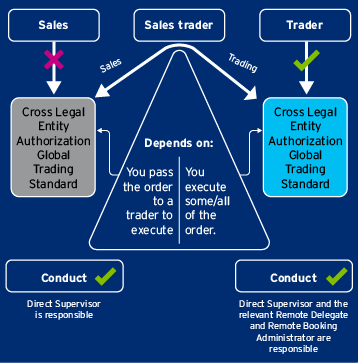
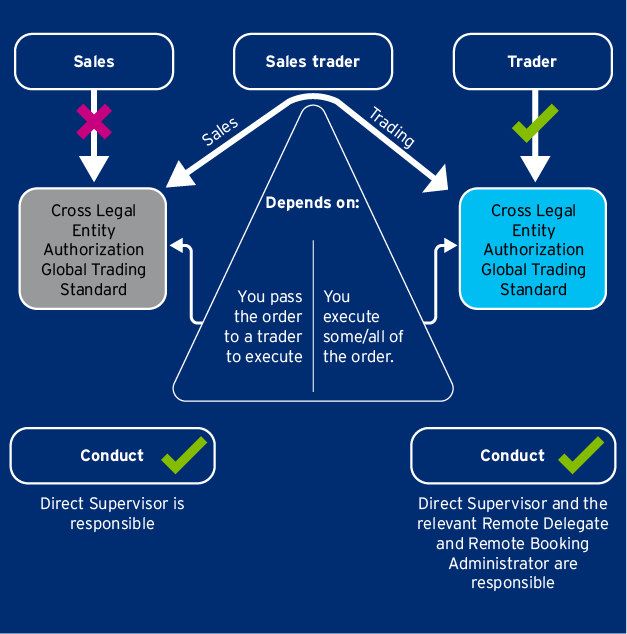
Diagram showing that if a sales trader passes the order to a trader to execute, the CLEA Standard does not apply and their Direct Supervisor is responsible. If they execute some or all of the order, the CLEA Standard applies and the Direct Supervisor, Remote Delegate and remote Booking Administrator are responsible.

Check Your Understanding

Which role provides sign-off for a Transactor’s CLEA request?

Select the best response and then select Submit.

Coming Next


Now that you understand what CLEA is, the next topic will tell you about the CLEA process.

The CLEA Process

In this topic, you’ll learn about the CLEA process, from authorization request through to reviews and governance.

Scroll down to continue.

Transaction Authorization Request

Each Transaction Authorization Request (TAR) must specify one of the following justifications to engage in Cross Legal Entity Activity on a specified Inbound Legal Entity:

  1. A Transactor needs to carry out Cross Legal Entity Activity to fulfil their responsibilities.
  2. A Transactor’s employing Outbound Legal Entity changes within Citi and the Transactor needs to continue to carry out Cross Legal Entity Activity onto an Inbound Legal Entity they are not employed by.
  3. The responsibilities of an RBAP are expanded, and they need to carry out Cross Legal Entity Activity onto an additional Inbound Legal Entity they are not authorized to book on, pursuant to the CLEA Global Trading Standard. (i.e., authorization is required for each legal entity in scope, there is no blanket approval).


The Authorization Process

The TAR will undergo an authorization process before a Transactor becomes approved to engage in Cross Legal Entity Activity on to the relevant Inbound Legal Entity.

Select the number below each stage in the process to see what’s expected of each role.

Transactor looking to become authorized

Required input from the Transactor as part of the request:
  • Specify the legal entity being booked to
  • Specify whether booking into PBWM CMI or Markets and the relevant Business
  • Provide an appropriate rationale for the request detailing why a specific Inbound Legal Entity is being proposed to be used
  • Confirmation that the relevant Cross Legal Entity Activity training has been completed
  • For Markets, verify that performing a transaction with the Inbound Legal Entity would be permitted within the PPL(s) on the ITM of the relevant Transactor
  • For PBWM CMI, verify that engaging in a transaction with the Inbound Legal Entity would be permitted within the Volcker Desk Mandate and desk’s PPL of the relevant Transactor

Direct Supervisor

  • Review whether the authorization rationale is suitable and applicable.
  • Check the need for Cross Legal Entity Activity onto the requested Inbound Legal Entity, as opposed to using the employing Outbound Legal Entity.
  • For Markets, verify that performing a transaction with the Inbound Legal Entity would be permitted within the PPL(s) on the ITM of the relevant Transactor.
  • For PBWM CMI, check whether the Inbound Legal Entity is aligned to the Desk PPL and the Desk Volcker Mandate.

Remote Delegate

  • Review appropriateness of rationale for using the relevant Inbound Legal Entity, as opposed to the Outbound Legal Entity.
  • Review if it is reasonable to increase the number of RBAPs committing the Inbound Legal Entity to Cross Legal Entity Activity.

Remote Booking Administrator

  • Check whether the RBAP has completed the required Cross Legal Entity Authorization training.
  • For Markets, verify that performing a transaction with the Inbound Legal Entity would be permitted within the PPL(s) on the ITM of the relevant Transactor.
  • For PBWM CMI, check whether the Inbound Legal Entity is aligned to the desk’s PPL and the Desk Volcker Mandate.

Legal Entity Representative

  • Review appropriateness of rationale for using the relevant Inbound Legal Entity, as opposed to the Outbound Legal Entity.
  • Review Inbound Legal Entity’s appetite to increase the number of Transactors committing the Inbound Legal Entity to Cross Legal Entity Activity.
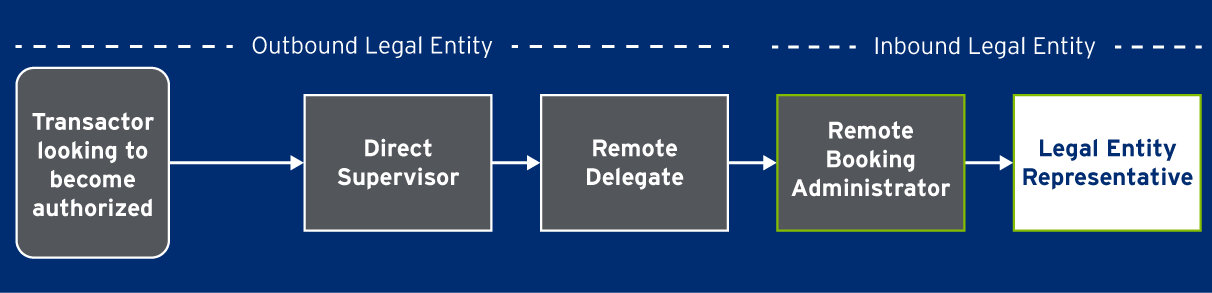
Flowchart showing roles within the Outbound Legal Entity are Transactor looking to become authorized, Direct Supervisor and Remote Delegate; and roles within the Inbound Legal Entity are Remote Booking Administrator and Legal Entity Representative.
1
2
3
4
5

Oversight and Maintenance

In addition to the tasks in the authorization process, each role has a number of other responsibilities in oversight and maintenance.

Select each role to learn more.

 
RBAP

RBAP

  • Promptly escalate and take steps to revoke their CLEA if access to the relevant Inbound Legal Entity is no longer required.
  • Inform the Remote Delegate and the RBA if there are any changes to their role that impact the RBAP List.
Direct Supervisor

Direct Supervisor

  • Periodically check whether the RBAP continues to engage in Cross Legal Entity Activity onto the relevant Inbound Legal Entity within the scope of, and in line with, the rationale provided in the relevant TAR.
  • If an RBAP no longer requires authorization or if authorization must be revoked for other reasons, work with the RBAP and RBA to remove them from the authorization list.
Remote Delegate

Remote Delegate

  • Work with the RBAP, Direct Supervisor, RBA and other relevant stakeholders to revoke authorization when necessary.
  • Raise to the relevant Direct Supervisor and Legal Entity Representative any performance-related issues of the RBAP.
Remote Booking Administrator

Remote Booking Administrator

  • Notify the relevant Legal Entity Representatives (or their delegates) of significant changes in the lists, such as an unusually rapid increase in authorization requests.
  • Check that the Legal Entity Representatives (and their delegates) receive regular Cross Legal Entity Activity reports and escalation reports in respect of the relevant RBAPs per Inbound Legal Entity.
  • Ensure the relevant RBAP lists are kept up to date and remove RBAPs whose authorization status had been revoked.
Legal Entity Representative

Legal Entity Representative

  • Formally confirm the Inbound Legal Entity’s willingness to incur the risk exposure associated with the (expected) Cross Legal Entity Activity.
  • Act as an escalation point for any issues related to Cross Legal Entity Activity onto the relevant Inbound Legal Entity.
  • Challenge the Cross Legal Entity Activity metrics, e.g. the number of RBAPs, in appropriate governance forums.

Performance Reviews and Governance

CLEA performance is assessed as part of performance reviews and has specific governance requirements.

Select each item to learn more.

 
Performance Reviews

Performance Reviews

As part of the year-end performance review for RBAPs:

  • CLEA performance will be assessed and taken into consideration at any point during the year, even if the RBAP held the role for a short time
  • CLEA Standard violations will also be considered

Where applicable, CLEA responsibilities in the year-end performance review/appraisal process for CLEA Approvers should also be considered.

Governance

Governance

Cross Legal Entity Activity is governed at the business and legal entity level. Forums will review a number of metrics and topics relevant for Cross Legal Entity Activity and violations that require escalation.

Metrics include the number of RBAPs, volume of Cross Legal Entity Activity, Unauthorized Transactor activity, and other issues. Matters requiring management attention should be escalated to the respective Inbound Legal Entity governance forums.

Check Your Understanding

Which of the following is the responsibility of the Direct Supervisor in the Cross Legal Entity Authorization process?

Select the best response and then select Submit.

Coming Next


You’ve learned about the CLEA process, but what controls are in place to monitor CLEA? Find out in the next topic.

CLEA Controls

In this topic, you’ll learn about the controls that ensure the CLEA process is followed, reports are generated and violations are reviewed.

Scroll down to continue.

UNO T0 Control

The primary control to detect transactors operating outside their Individual Trader Mandate by booking without authorization to a legal entity is the T0 Legal Entity Alert. This automated control only applies to Markets. PBWM CMI relies on a manual, detective control executed by Trade Operations.

This reviews all transactions booked onto in-scope legal entities to ensure the Transactor is authorized in line with the relevant CLEA Authorization entity authorization list. If the person is not on the appropriate list, UNO will generate a T0 Legal Entity Alert.

Select each number on the image to learn more.

Alert Raised/Re-opened

The alert is reviewed by the Business Management in the country for the product and assessed as either an Operational Violation or Unauthorized Activity.

  • An Operational Violation is a system or process issue for which the Transactor cannot be reasonably held to account. No further action is required.
  • If, after identification, review and possible escalation, it is assessed to be a true breach, a severity rating will be assigned linked to a rating grid.

Alert Closed

Timeliness to close alerts is monitored via daily/weekly reporting. There is daily follow-up with Business Managers on all aging alerts.

Alert Closure Review (QA)

All closed alerts are reviewed to ensure the correct reason codes have been applied. QA review may result in an alert bring re-opened.

Email to Transactor

If unauthorized trading activity has been identified, the transactor is advised by email (cc trading supervisor) to cease trading until fully authorized.

Product Compliance

All unauthorized trading activity is escalated to Product Compliance for further review and action.
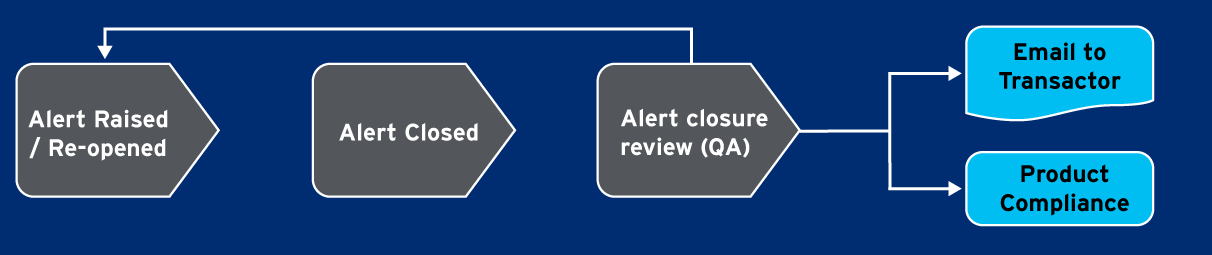

Flowchart shows the steps in the process from Alert Raised, to Alert Closed, to Alert Closure Review (QA). The alert may be reopened after review. If it is not reopened, an email is sent to the Transactor and Product Compliance is notified.
1
2
3
4
5

Reporting

There is a suite of reports documenting the running and monitoring of the controls within the control inventory. Reports and/or dashboards must be generated for relevant stakeholders and governance forums, including legal entity governance forums, by a combination of the Markets Booking Control Group, In-Business Risk and Controls teams, the Global Booking Team and the Businesses.

Reports provide management information (MI) related to:

  • Volumes of and changes in Cross Legal Entity Activity by the Business and Inbound Legal Entity
  • RBAP Lists and changes in the number of RBAPs for the RBAP List
  • Cross Legal Entity Activity by Unauthorized Transactors per Inbound Legal Entity

Violations Review Process

Select the link to view the Violations Review Process.

Select each item to learn more about the process.

 
Identification

Identification

For Markets, the Markets Booking Control Group maintain T0 Control exception alerts which performs near real-time monitoring on trade flows booked via front office systems into Markets firm accounts.

[For PBWM CMI, Trade Operations, as part of their trade confirmation process, will review whether the Transactor is Authorized pursuant to this Standard to book onto the relevant Inbound Legal Entity, thereby acting as a detective control.]

Transactions entered into by Inbound Legal Entities are subject to an ongoing monitoring and review process and Unauthorized Transactors shall be further identified, reviewed and escalated, where applicable.

Assessment of Unauthorized Transactors

Assessment of Unauthorized Transactors

For each violation, a “Violations Rater” (being the Markets Booking Control Group for Markets and PBWM CMI) must assign a severity rating to it in accordance with the applicable rating grid.

Violations Review

Violations Review

Initially rated activity by Unauthorized Transactors will be reported to the Violations Review Group (VRG) to finalize the assessment of severity rating for the violations.

The Violations Review Group will include representatives from Independent Risk Management, the Global Booking Team, Independent Compliance Risk Management, Legal, Human Resources, and Markets Booking Control Group. All violations will be reported to the VRG members, allowing members to review and challenge if applicable.

Post-assessment and determination of a final rating, for any rated violation, the Violations Rater will report Unauthorized Transactors to HR and will be represented on the Performance, Conduct and Risk (PCR) for Markets employees.

Reporting

Reporting

CLEA violations will be reported to the Business Risk and Control Forums (BRCF), legal entity governance forums and relevant BRCC (if required).

Think about the risks…

Think back to what you read earlier about needing a license to drive a car. There are different levels of penalties for not following the rules when driving, and there’s a risk you could lose your license.

What do you think would happen if you failed to follow the requirements for CLEA?
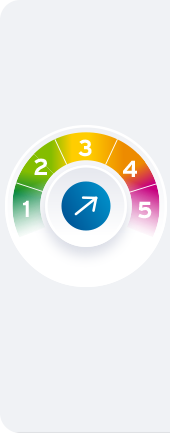


Risks of not Following Requirements

The risks involved should you fail to follow the requirements set out in Citi policies range from a policy reminder, through reprimand, to termination.

As violations occur day-to-day, the violations review process owner and the Violations Review Group (VRG) will assign ratings consistently using a rating grid, before submitting the rated violations to HR.

Check Your Understanding

How is the timeliness to close UNO T0 alerts monitored?

Select the best response and then select Submit.

Coming Next


Now that you know about our internal controls, let’s see what the regulators require regarding CLEA.

Regulatory Expectations

In this topic, we’ll look at the requirements of regulators in the UK, Germany, Ireland and the US, as well as the European Central Bank, regarding Cross Legal Entity Activity. We’ll also review a case study showing the regulatory penalties associated with inadequate oversight of trades being booked by overseas transactors.

Scroll down to continue.

Key European Regulators

A number of European regulators have specific requirements regarding CLEA. The firm must take these requirements into account in developing systems and controls commensurate with the risks that it incurs across businesses and geographical locations. Without proper arrangements in place, the booking of transactions onto a UK/EU legal entity by employees of non-UK/EU legal entities may lead to significant legal, regulatory, tax and personal implications.

Select each tab to learn more.

UK
European Central Bank
Germany
Ireland

UK

The UK regulators (Financial Conduct Authority and Prudential Regulation Authority) have an expectation that all activity booked onto UK legal entities is overseen by an approved Senior Manager, regardless of the country from which it is booked.

Under rule SYSC 3.1.1 of the FCA Handbook:
“A firm must take reasonable care to establish and maintain such systems and controls as are appropriate to its business”, taking into account such factors as the “nature, scale and complexity of its business, the diversity of its operations, including geographical diversity, the volume and size of its transactions, and the degree of risk associated with each area of its operation”.

RBAPs on CGML, CBNA London branch and CEP UK must note the FCA requirements regarding the Client Asset Sourcebook (CASS).

You must select the link above before continuing.

European Central Bank

According to the “Supervisory expectations on booking models” issued by the ECB in August 2018:

  • Single supervisory mechanism (SSM) banks must have booking models and hedging strategies in place that enable them to have full control over their onshore exposures
  • EU27 products and transactions with EU27 clients are expected to be booked onshore and banks should have adequate risk management capabilities onshore (including first and second lines of defence)

As an SSM entity, CEP must maintain a “sound and effective” risk management and governance framework through an appropriately skilled staff and governance body, and must be able to provide effective oversight over its activities and booking practices.
Germany

The German regulator, BaFin, has an expectation that all activity booked onto CGME is overseen by the CGME Head of Markets and Securities Services, regardless of the country from which it is booked.

A number of laws and regulations are relevant:

Ireland

The Fitness and Probity (F&P) Standards are issued by the Central Bank of Ireland (CBI) pursuant to the powers set out in Irish law.

The Central Bank Reform Act of 2010 provides that a person performing a controlled function (CF) in regulated financial service providers must have a level of fitness and probity appropriate to the performance of that particular function.

The Citibank Europe Plc (CEP) MSS Head has determined that employees who have the ability to book transactions to CEP will be treated in the same manner as a proprietary transactor equivalent to the CF11 classification:


  • Dealing in or with property on behalf of CEP/CEP branches as the regulated financial service provider

Other Regulatory Requirements

There are some additional regulatory requirements in the US and EU that you need to be aware of.

Select each regulation to learn more.

 
Dodd-Frank Act (US)

Dodd-Frank Act (US)

The Commodity Futures Trading Commission (CFTC) introduced new rules that govern how OTC derivatives are traded including:

  • Executing in-scope products on a registered Swap Execution Facility (SEF)
  • Providing pre-trade mid marks to clients before entering into trades for in-scope products
Market Abuse Regulation (EU)

Market Abuse Regulation (EU)

The regulation lists a number of abusive behaviors that are prohibited and need to be escalated to the relevant EU regulator in a timely manner. For more information, check the Prohibited Sales & Trading Activities Policy.

The Market Soundings Regime establishes strict procedures that need to be followed when gauging interest in a potential transaction before the announcement of the deal. For more information, check the DCM Market Soundings & Investor Contact Guidelines.

MiFID II (EU)

MiFID II (EU)

MiFID II introduced a number of requirements that EU firms need to comply with, including:

  • Pre/post trade transparency requirements
  • Logging and handling of customer complaints
  • T+1 transaction reporting
BaFin Market Conformity Controls (Germany)

BaFin Market Conformity Controls (Germany)

Transactions processed through CGME are subject to BaFin’s Market Conformity Controls, a daily process to ensure fair pricing.

Hong Kong Monetary Authority (HKMA) / HK Securities and Futures Commission (SFC)

Hong Kong Monetary Authority (HKMA) / HK Securities and Futures Commission (SFC)

Regulatory Considerations when booking onto Citibank N.A. Hong Kong Branch (CBNA HK) and Citigroup Global Markets Hong Kong Limited (CGMHKL):

  • For transactions involving FX instruments, RBAPs should be CBNA staff.

  • Although CGMHKL is not a regulated entity in Hong Kong, its activities are nominally overseen by the SFC. Certain conditions have to be met to maintain CGMHKL’s unregulated status:
    • CGMHKL does not face clients:
      • For OTC derivative activities, CGMHKL can only face internal Citi affiliates – not external parties.
      • For listed equities, listed futures and listed options, CGMHKL can trade as principal with regulated broker-dealers.
    • No OTC derivatives to be booked onto CGMHKL from offshore, except for activities that are explicitly pre-cleared with Compliance.
  • In a circumstance where RBAPs are offshore non-HK licensed staff, the following shall be observed to avoid triggering of local licensing concern:
    • The business should be conducted on a cross-border basis (without any operations in Hong Kong or regular visits by RBAPs to Hong Kong);
    • No offshore entity or personnel should hold out as being able to conduct business in Hong Kong;
    • There should be no active marketing of the services to the Hong Kong public;
    • No onshore affiliates or their staff should be involved; and
    • Clients should be onboarded as institutional professional investors and corporate professional investors (i.e., no retail).

For further requirements and governance framework implemented for Hong Kong Markets, refer to Hong Kong Markets CLEA Governance Procedures.

Case Study: Deutsche Bank

We’ll conclude this topic with a review of a case study that highlights the risks of a lack of CLEA oversight.

Select the forward arrow to learn more.


Money Transfers

Deutsche Bank AG was fined USD 629 million by UK and US regulators for operational failures that saw the bank help wealthy Russians move about USD 10 billion out of the country, using transactions that were likely thinly veiled attempts to cover up financial crime.


Mirror Trades

From April 2012 to October 2014, mirror trades were used by Deutsche Bank customers to transfer more than USD 6 billion from Russia, converting roubles to dollars and disguising where the money came from and who owned it. The misbehavior stretched across Deutsche Bank's Moscow, London and New York offices.

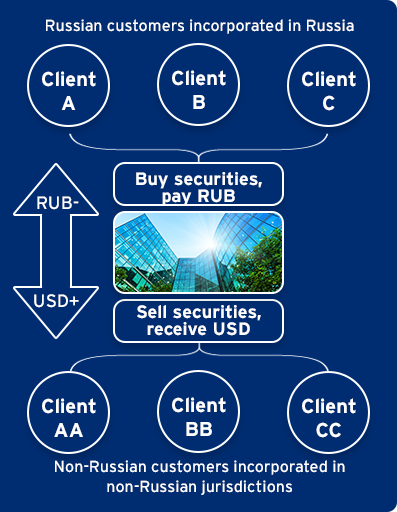
The “mirror trades” allowed Russian customers to buy local blue-chip shares for roubles, while the same stocks would be sold to non-Russian customers in London for dollars, in order to obtain the US currency.

 
Diagram shows Russian customers incorporated in Russia buy securities and pay in roubles, while non-Russian customers incorporated in non-Russian jurisdictions sell securities and receive US dollars.

The Bank’s Failings

Deutsche Bank AG failed to adequately monitor trading activity on its legal entities and was unaware of the legality and economic purpose of the trades being booked by overseas transactors.


The Regulator’s View

Mark Steward, Director of Enforcement and Market Oversight at the FCA, said:

"Financial crime is a risk to the UK financial system. Deutsche Bank was obliged to establish and maintain an effective AML control framework. By failing to do so, Deutsche Bank put itself at risk of being used to facilitate financial crime and exposed the UK to the risk of financial crime.”


Lesson Learned

While the event specifically relates to Financial Crime, Deutsche Bank could have mitigated risks by understanding who was booking risk onto their UK legal entity and from where, while ensuring it had a sound economic purpose.


Coming Next


In the next topic, you can review what you’ve learned in this course.

Conclusion

Review the key takeaways from this course before you take the assessment.

Scroll down to continue.

Key Takeaways

In this course, you’ve seen that there is significant internal and external focus on the risks associated with overseas booking onto Inbound Legal Entities. You should now understand:

  • The roles and responsibilities in the CLEA process
  • The applicable CLEA controls and escalation procedures
  • Regulatory expectations for CLEA

It’s essential that you know:

  • Who your relevant Legal Entity Representative, Remote Delegate and Remote Booking Administrators are
  • What steps you need to take to become a Remote Booking Authorized Person (RBAP)
  • What your responsibilities are as an RBAP

Finally, remember that if you are ever unsure, escalate.



Coming Next


In the next topic, it’s time to check your understanding of the content by completing a short assessment.

Assessment

Haruto-san, a rates transactor based in Japan who currently books all risk on his local legal vehicle (CGMJ), is approached by one of his regular clients to start trading US swaps. Haruto-san would like to book this activity onto CBNA NY.

Which individual(s) must Haruto-san receive authorization from before booking onto CBNA NY from a cross legal entity transaction perspective?

Select the best response and then select Submit.

Who has the ultimate responsibility for the cross legal entity activity booked onto an Inbound Legal Entity?

Select the best response and then select Submit.

Which of the following roles is/are employed or located in the same country or region as the Inbound Legal Entity?

Select the best response and then select Submit.

Who should the RBAP inform regarding any changes that impact the relevant Cross Legal Entity Authorization, including a change of the RBAP’s role and when they no longer expect to engage in Cross Legal Entity Activity onto a relevant Inbound Legal Entity?

Select the best response and then select Submit.

Which of the following triggers a need to raise a Transactor Authorization Request (TAR) for a Transactor?

Select all that apply and then select Submit.

Assessment Results


Menu
Home

Welcome
What Is CLEA?
The CLEA Process
CLEA Controls
Regulatory Expectations
Conclusion
Assessment