Introduction
Goldman Sachs has a robust control framework in place to prevent and detect financial crime. But our best defense remains the actions and instincts of our people and our collective commitment to doing the right thing.
The Financial Crime Compliance (FCC) mandate is to manage and mitigate legal, regulatory, and reputational risk by preventing and detecting money laundering, terrorist financing, bribery, corruption, government sanctions violations, and other forms of misconduct by the firm, employees and clients.
This training focuses on Anti-Money Laundering and Government Sanctions, providing you with the knowledge to identify and report potential concerns through FCC or Divisional Compliance channels.
Understanding these topics is critical to your role at the firm, regardless of your region, business, and day to day responsibilities.

Learning Objectives
At the end of this training, you should be able to:
- Explain key concepts related to AML and Government Sanctions
- Describe how we comply with AML and Government Sanctions laws and regulations
- Recognize the requirements of the Know Your Customer (KYC) process
- Identify red flags of financial crime risk and recognize when and how to escalate
- Identify types of Government Sanctions and comprehensively sanctioned jurisdictions
Let’s get started.
Know Your Customer (KYC) Basics
Over the past year, the enforcement and regulatory environment remained aggressive from a financial crime compliance perspective, with approximately US$8 billion in fines issued to financial institutions for financial crime compliance failures. In addition to monetary penalties, these cases have resulted in asset caps, monitorships and restrictions on new business activity.
Fighting financial crime always begins with knowing your customer. Our first line of defense is responsible for knowing our clients (including how they derived their funds and wealth), understanding the activity they are transacting through the firm, and being alert to and escalating signs of suspicious activities.
Scroll down to continue.



Be alert - the following customers may present heightened risk to the firm.
A customer who:
- Is the subject of adverse media coverage, civil or criminal litigation, or has a history of criminal or regulatory infractions
- Has a touchpoint to, or is located in a high-risk jurisdiction
- Always check the firm’s country lists and note that countries on List 3c and 4 are considered high and highest AML risk, respectively
- Has an uncommon or overly complex ownership structure without a clear and legitimate commercial purpose
- Is a Politically Exposed Person (PEP) (i.e., a current or former government official or related or closely affiliated with a government official)
- Has a high-risk, unclear, or uncorroborated source of wealth (e.g., cash intensive businesses, marijuana- related business, casinos/gaming)

Activity that is normal and expected for one customer may not be normal/expected for another. Knowing and understanding your customer’s expected activity will help you to better identify any unusual activity they may engage in.
Be aware of the following red flags when considering the nature of the customer’s business and their expected activity and escalate any concerns to FCC or divisional Compliance.
A customer who:
- Is engaged in activity that is inconsistent with their known wealth (i.e., significantly outsized for their profile)
- Is focused on keeping their transactions discreet, and specifically asks about how to conceal transactions from regulators
- Proposes activities or transactions that are overly complex and do not make economic sense

Funds invested or traded must be legitimately obtained, and the customer’s source of wealth or funds should be consistent with their net worth and account activity.
A customer that refuses to identify their source of wealth or funds is a red flag that requires you to stop and escalate.



The Bottom Line
- Take onboarding and KYC seriously, but don’t stop there. You must continuously monitor client activity for any red flags.
- Ensure that client KYC information remains current and is refreshed in accordance with the firm’s “Rolling Review” program.
- Do not reveal any potential suspicions you may have to your client – doing so could give rise to a violation of law that prohibit “tipping” off the client.
- Escalate any red flags to FCC or divisional Compliance.
Know the red flags that require you to escalate and do so as soon as possible.

Other Financial Crime Related Risks
Stay alert and aware of evolving risks and potential red flags.
Scroll down to continue.



Terrorist Financing
There are three main indicators of terrorist financing.
Select each image to see examples of each indicator.
1. Financial Indicators
Financial indicators include:
- An unusually high volume of low-value transactions that deviate from the client’s expected activity and are sent to unknown third parties
- A large number of incoming or outgoing transactions where no logical business or other economic purpose for the transfers is present, particularly when this activity involves higher-risk locations for terrorism
- Transactions that occur with an organization for which there appears to be no logical economic purpose or link between the stated activity of the organization and the other parties in the transaction
- Transactions with non-profit organizations (NPO) for which the NPO:
- Operates in or near locations known for terrorism
- Conducts operating or fundraising activities that are opaque
go to next button
2. Behavioral Indicators
Behavioral Indicators include:
- Rapid changes in a client’s communication style or behavior online, in-person or over the phone may be indicative of extremist ideologies or terrorist financing when associated with one or more of the following:
- Client promotes or praises violence, extremist ideologies, and/or successful or attempted attacks
- Client expresses a desire, or is preparing to travel to a conflict zone to support an extremist group
- Client has prior travel activity to destinations where extremist groups are located, and the travel is unusual for the client
- Client advocates violence toward individuals, military or government officials, law enforcement, or civilian targets
go to next button
3. Account Indicators
Account Indicators include:
- An account is created in the name of entities or individuals linked to or involved with terrorist activities
- A client persistently attempts to conceal the identities of beneficial owners or counterparties located in or near high-risk locations for terrorism
return to this button



Industries Susceptible to MSHT
Certain industries are more susceptible to exploitive labor practices and involve the hiring of an economically and sociologically vulnerable workforce.
Select each image to learn more about the industries.
Manufacturing/Construction
Multi-tiered supply chains spanning less-developed countries, with labor-intensive processes involving large numbers of low-skilled, often migrant workers, exist across both industries.
This makes it difficult to monitor and ensure fair labor practices, increasing the risk of exploitation.
go to next button
Textiles
Slavery and exploitation exist at all stages of the garment-making process. Intense competition in the textiles market puts pressure on textile manufacturers to minimize costs, often resulting in low wages and poor working conditions.
go to next button
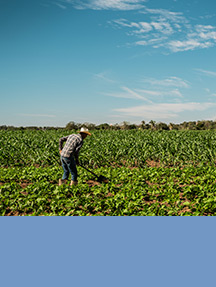
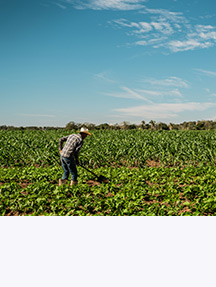
Agriculture
Seasonal and migrant labor in the agricultural sector involves a transient workforce often lacking legal protections. The nature of the agricultural work makes laborers easily replaceable and thus more vulnerable and exploitable.
go to next button
Transport
Similar to manufacturing and construction, the supply chains in the transport industry often involve numerous subcontractors and intermediaries, which can obscure labor abuses and create challenges in monitoring and enforcing labor standards.
go to next button
Food Processing
The meat industry is notorious for modern slavery as people may be coerced to work using violence, ID-retention, and threat of denunciation to immigration authorities. Food processing jobs are typically low-wage and have high turnover rates, creating a workforce that is economically vulnerable.
return to this button







The Bottom Line
Remember, we have a collective responsibility to stay vigilant, identifying and escalating the red flags of financial crime.
Do your part to protect the firm, our customers, and yourself: ask yourself the three key questions to get to know your customer and continue to monitor client activity. Be mindful of any restrictions placed on an existing account.
Know the red flags that require you to stop and escalate. Escalate any questions or concerns to FCC or divisional Compliance.

Business and Country-Specific Requirements
The firm’s broader AML Program includes important and targeted content you should know depending on your business area and office location.
By staying informed about business and country-specific requirements, as well as our global firmwide guidelines, we can better navigate the complex regulatory landscape, mitigate risks, and demonstrate our commitment to financial crime compliance.
Scroll down to continue.
Your Country Requirements
In addition to firmwide global requirements, country-specific regulations also apply and must be understood.
If you reside, provide support to, or do business in any of the jurisdictions listed here, select that location and familiarize yourself with the country-specific information.
Once you have read the information provided, close out of the PDF and find the course window in your browser to continue with this training.
If you work in a location other than one of the locations listed here, you can continue with the training.

The Bottom Line
Know and stay up to date on the specific requirements for your business and the locations that you reside in, provide support to, or do business in.
Know the red flags that require you to escalate and do so as soon as possible.

Sanctions
Sanctions take many different forms and include many countries. They are constantly evolving and require us to be vigilant as conditions across the world change.
Scroll down to continue.
Types of Government Sanctions
Economic sanctions take a variety of forms and generally fall into three categories.
Select each image to learn about that economic sanctions category.




Comprehensive Sanctions
Comprehensive sanctions broadly prohibit most firm activity involving or provided directly or indirectly to the government, an individual or entity domiciled in, or organized under the laws of, a comprehensively sanctioned jurisdiction.

List-Based Asset Freeze Sanctions
List-based asset freeze sanctions target individuals and entities involved in certain illicit activities. Governments and international bodies create lists of individuals and entities with whom the firm is prohibited from transacting.

Capital Markets Restrictions
Capital markets restrictions apply to sectors of the Russian, Chinese and Belarussian economies, as well as the Government of Venezuela. Transactions and firm activity that may implicate any entities targeted by such restrictions must be escalated to FCC for review.

Our Responsibilities:
If you become aware of any activity with a possible connection to one of these countries/regions, always escalate to your manager, FCC, or divisional Compliance.

List-based Asset Freeze Sanctions
Next, let’s look at how list-based asset freeze sanctions work.
Select each image to learn more about list-based asset freeze sanctions.

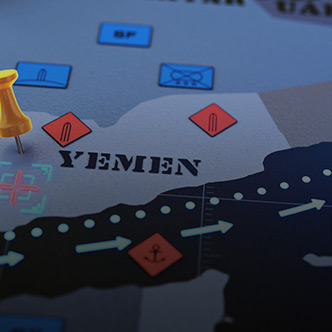



Which activities do list-based asset freeze sanctions target?
List-based asset freeze sanctions target individuals and entities involved in certain illicit activities such as:
- Transnational criminal organizations
- Human rights accountability and corruption
- Narcotics trafficking
- Cyber-related crimes
- Rough diamond trade
- Terrorism
- Weapons proliferation
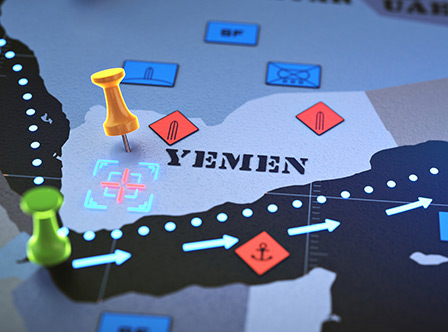
Which countries do list-based asset freeze sanctions target?
Targeted individuals and entities can be based in any country, including those that are considered to be lower-risk, such as Canada and the UK. Even if a list-based program exists for a specific country, there could also be additional broad prohibitions within the same jurisdiction.
Some countries/regions in which list-based sanctions exist include:
| Afghanistan | Hong Kong | Somalia |
| Balkans | Iraq | South Sudan |
| Belarus | Lebanon | Sudan and Darfur |
| Burma | Libya | Syria (former Assad Regime) |
| Central African Republic | Mali | Venezuela |
| Democratic Republic of Congo | Nicaragua | West Bank-Related Sanctions |
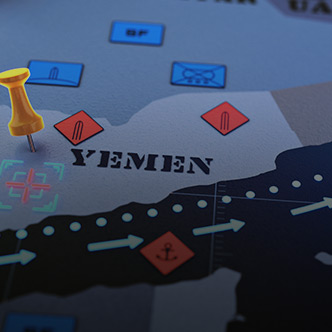
| Ethiopia | Russia | Yemen |

What are our responsibilities?
The firm is required to block, (i.e., freeze) any assets in which a list-based asset freeze sanctions target has an interest. The assets are blocked and can only be unblocked if sanctions are lifted or if the activity is authorized by the relevant government authority.
If a list-based program exists for a specific country (e.g., targeting government officials and corrupt actors in Nicaragua), the country is not also subject to comprehensive sanctions. However, there may be certain other restrictions targeting government officials, entities, or specific sectors (e.g., sectoral sanctions). These countries are often considered high-risk for other types of financial crime.

How should I raise a concern?
While the firm deploys screening controls to identify sanctioned parties, if you become aware of any possible connection to a sanctioned individual or entity or have any other sanctions-related concerns, escalate to your manager, FCC, or divisional Compliance.
Russia
The expanded Russia sanctions in 2022 target many sectors of the Russian economy, including energy, defense, and technology. Sanctions now also include broad capital markets restrictions that generally prohibit trading of, or dealing in, new and existing debt and equity of all Russian entities.
These sanctions affect the firm’s ability to deal with securities of companies that operate in, or derive predominant revenue, from Russia. Certain transactions related to the divestment of securities issued by Russian entities are permissible only with Compliance review and approval. Always escalate any Russia exposure to your manager, FCC, or divisional Compliance.
Venezuela
The firm considers Venezuela a high-risk country for money laundering and corruption.
The US government has imposed an asset freeze against the Government of Venezuela and its entities/agencies, including Venezuela’s state-owned oil company Petroleos de Venezuela S.A., (“PdVSA”).
However, Venezuela is not a comprehensively sanctioned jurisdiction and generally, sanctions do not prohibit US persons from conducting business in Venezuela or with non-governmental Venezuelan entities.
Certain transactions related to the divestment of securities issued by the Government of Venezuela are permissible only with Compliance review and approval. Escalate any potential exposure to the Government of Venezuela and its entities/agencies to your manager or Compliance.
China
US sanctions prohibit any purchase or sale of publicly traded securities of entities identified by the US government as a Chinese Military-Industrial Complex company (CMIC).
This means that the firm and its US person clients are prohibited from making new investments in these companies’ securities, including through exchange-traded funds (ETFs) or other mutual funds that hold such securities. If you have questions about whether certain activity with a CMIC entity is permissible, always escalate to your manager or Compliance.
Belarus
In addition to asset freezes against individuals and entities, EU sanctions against Belarus include capital markets restrictions related to the Government of Belarus and import/export-related restrictions on certain Belarus-origin goods such as petroleum products and potash.





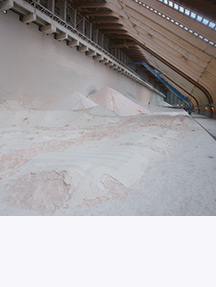
Let’s look at some examples of commodities derived from sanctioned countries.
Select each image to learn more about the commodities.
Metals
Aluminum
- Certain brands of aluminum are produced in Iran and Russia
Nickel
- Certain brands of nickel contain Cuban-origin nickel (e.g., Sherritt, a Canadian entity) or nickel produced in Russia
Copper / Cobalt
- Certain brands of copper or cobalt are produced in Russia
go to next button
Fuel and Crude Oil
Fuel and crude oil are commonly produced in Russia, Iran, Syria, Venezuela, and Cuba.
go to next button
Potash
Belarus is the world’s second-largest producer of potash. EU sanctions include an import ban from state-owned producer, Belaruskali.
return to this button


The Bottom Line
Sanctions can change quickly and take many different forms. Your role is vital in identifying potential sanctions risks and escalating appropriately.
Know the red flags that require you to escalate and do so as soon as possible.

The Sum of It
It’s almost time to test what you have learned in this training. But before you go, let’s take a moment to reflect on the key takeaways of this training.
Scroll down to continue.




You are the firm’s best defense in complying with government sanctions!
Scroll down to continue.
John Smith, a high-net-worth entrepreneur, is seeking to establish a relationship with Goldman Sachs Wealth Management (WM). He meets the firm's client criteria and has engaged with a Private Wealth Advisor (PWA). During discussions, John discloses that a substantial portion of his wealth originates from investments and sales of cryptocurrency.
As a WM Professional responsible for his onboarding, which of the following is the most appropriate course of action?
Select the best response and then select Submit.
Please use the tab and shift tab keys only to access each option and the Submit button with the keyboard. The up and down arrow keys are not fully supported. You can use the Enter or Space key to select a radio option or the Submit button with the keyboard.
That’s correct.
The most appropriate action is to escalate John's source of wealth to the Compliance team. Financial institutions, including wealth management firms, have stringent KYC obligations. While meeting financial criteria is a prerequisite, the source of wealth, especially when it involves less traditional or evolving asset classes like cryptocurrency, requires thorough scrutiny.
Sorry, that’s not quite right.
Sorry, that's not right.
"Globex Corporation," an established client, has historically shown consistent, moderate transaction volumes. Recently, the firm’s surveillance flagged a sudden, significant increase in incoming wire transfers to Globex Corporation’s account, primarily from entities registered in a jurisdiction known for its strict banking secrecy laws and limited beneficial ownership transparency. While the stated purpose of these transfers is "consulting fees," the amounts seem disproportionately high compared to Globex Corporation’s usual business profile and publicly available financial statements. When the relationship manager asks for additional documentation regarding the source of these funds and the nature of the consulting services, the client delays providing comprehensive details and emphasizes the need for "utmost discretion" due to "competitive sensitivities."
Which of the following actions is the most appropriate to take regarding Globex Corporation?
Select the best response and then select Submit.
Please use the tab and shift tab keys only to access each option and the Submit button with the keyboard. The up and down arrow keys are not fully supported. You can use the Enter or Space key to select a radio option or the Submit button with the keyboard.
That’s correct.
This scenario presents several red flags indicative of potential tax evasion and money laundering, which financial institutions are obligated to detect and report.
- Sudden, significant increase in transfers: A drastic change in transaction patterns, especially a large influx of funds, is a key indicator of suspicious activity.
- Transfers from high-risk jurisdictions: Funds originating from jurisdictions known for banking secrecy and limited beneficial ownership transparency (often associated with tax havens) significantly increase the risk profile.
- Disproportionate amounts to business profile: When transaction amounts don't align with the client's known business activities or financial standing, it suggests potential illicit activity.
- Vague explanations and emphasis on "discretion": Evasive responses, delays in providing documentation, and an unusual insistence on secrecy are common behaviors of individuals or entities attempting to conceal the true source or purpose of funds, often associated with tax evasion schemes.
- "Consulting fees" as a cover: This is a common method used to disguise illicit payments or undeclared income.
Sorry, that’s not quite right.
Sorry, that's not right.
Sam, a trader in GBM Public, receives a phone call from Marc Settle, a longstanding customer who holds positions in illiquid bonds. Marc is concerned about his positions as there has been significant selling interest in one of his illiquid bonds recently, which is causing the value of his positions to drop, and his fund is under pressure. Earlier in the day, a different holder of the same bond requested Sam to sell off his position. Marc wants to take this opportunity and asks Sam if Goldman Sachs can work with him to “help his fund out” by selling his bond, for which he is willing to pay significantly over market value. Marc tells Sam, "I need the bond prices back up in the market to a certain level by the end of the quarter” and asks him to give him a call back when he has the bond. The conversation abruptly ends.
Which of the following represents the complete correct answer?
Select the best response and then select Submit.
Please use the tab and shift tab keys only to access each option and the Submit button with the keyboard. The up and down arrow keys are not fully supported. You can use the Enter or Space key to select a radio option or the Submit button with the keyboard.
That’s correct.
Given the client has a large position in the illiquid bonds and is willing to pay significantly above market price. It is possible they are seeking to artificially inflate the price of the bond, which could benefit his fund in their quarterly reporting. This situation is a red flag for market manipulation and needs to be investigated.
Sam should not disregard the suspicious activity and should immediately escalate to Compliance and his supervisor.
Sorry, that’s not quite right.
Sorry, that's not right.
Mr. John Doe, a long-standing client, contacts his PWA, Susan, requesting an immediate wire transfer of a significant sum to a newly established bank account. This request comes via a hastily written email, which mentions a "time-sensitive investment opportunity" and includes bank details in an unfamiliar foreign country. The email address appears correct, but the tone and spelling differ from Mr. Doe's usual communication style, and he usually calls for such significant requests. The wealth manager notices that the attached "investment prospectus" looks amateurish and contains several grammatical errors.
Given the potential for identity theft, which of the following is the most appropriate initial action Susan should take?
Select the best response and then select Submit.
Please use the tab and shift tab keys only to access each option and the Submit button with the keyboard. The up and down arrow keys are not fully supported. You can use the Enter or Space key to select a radio option or the Submit button with the keyboard.
That’s correct.
This scenario presents several classic red flags for identity theft and financial fraud, specifically a Business Email Compromise (BEC) or imposter scam. The definition of identity theft includes using stolen PII to misappropriate funds. The inconsistencies in communication style, the urgency, the request for a transfer to a new, unfamiliar foreign account, and the poorly drafted "investment prospectus" all indicate a high likelihood that the email is not from the legitimate client but from a fraudster who has compromised the client's email or is impersonating them.
Sorry, that’s not quite right.
Sorry, that's not right.
Joe, an analyst, working on the trading desk, inadvertently gains access to highly confidential information about a pending M&A deal that GBM Private is advising on. This information, detailing the acquisition of "Advent Corp." by "Acme Inc." at a significant premium, is considered material and non-public. Recognizing its market-moving potential, Joe uses this information to execute trades in Advent Corp.'s stock, leading to substantial profits for the proprietary trading desk before the merger is publicly announced.
Do you identify any concerns with the scenario?
Select the best response and then select Submit.
Please use the tab and shift tab keys only to access each option and the Submit button with the keyboard. The up and down arrow keys are not fully supported. You can use the Enter or Space key to select a radio option or the Submit button with the keyboard.
That’s correct.
Insider trading involves buying or selling securities based on material, non-public information (MNPI) to gain an unfair advantage or avoid a loss. In this scenario, the analyst accessed MNPI about a pending M&A deal. Even though the firm has established information barriers to prevent the flow of such sensitive information between departments (e.g., between GBM Private and Public), the act of trading on MNPI, regardless of how it was obtained or whether the profit accrued to an individual or the firm, constitutes illegal insider trading. The firm can be held liable for its employees' actions if they trade on such information.
Sorry, that’s not quite right.
Sorry, that's not right.
Upon reviewing onboarding documents provided by a prospective GBM Public client, you notice the company derives 15% of their revenue from business ventures indirectly operating in Iran and has two subsidiaries domiciled in Venezuela that support the local energy sector through government contracts. The prospective client’s attestation to the firm states they are compliant with relevant sanctions regulations, including those administered by the U.S. Department of the Treasury’s Office of Foreign Assets Control.
What action should you take?
Select the best response and then select Submit.
Please use the tab and shift tab keys only to access each option and the Submit button with the keyboard. The up and down arrow keys are not fully supported. You can use the Enter or Space key to select a radio option or the Submit button with the keyboard.
That’s correct.
All sanctions touchpoints must be escalated to and reviewed by Financial Crime Compliance to determine whether the relevant activity is prohibited and/or within the firm’s risk appetite. Even where such activity is permissible, additional action(s) may be required to mitigate risk for the firm.
Sorry, that’s not quite right.
Sorry, that's not right.
A client based in Germany wants to transfer a portfolio of securities from another financial institution to the firm. The portfolio includes securities issued by a financial institution located in Russia, which is owned by a prominent Russian oligarch. The client assures you the securities are not subject to sanctions restrictions and promises to bring in a lot of future business if you can make the transfer happen.
Which of the following actions should you take?
Select the best response and then select Submit.
Please use the tab and shift tab keys only to access each option and the Submit button with the keyboard. The up and down arrow keys are not fully supported. You can use the Enter or Space key to select a radio option or the Submit button with the keyboard.
That’s correct.
There are numerous and complex sanctions against Russia that include prohibitions on dealing in nearly all Russian-issued securities. You should not rely on statements regarding the applicability of sanctions to a particular transaction – always escalate to Compliance.
Sorry, that’s not quite right.
Sorry, that's not right.
Attestation
Scroll down to continue.