
Welcome to the Insider Trading and Market Manipulation Training. This video contains audio and a transcript. To listen to the audio, please use your headphones or adjust your speakers.
Select the Play button to begin.
Review the course objectives and tips on how to navigate this course.
Scroll down to continue.

This course is divided into 6 topics and an end-of-course assessment.

The Home button at the end of each topic takes you to the Home page.

The Menu button provides access to the individual topics.

The Resources button provides a list of useful links.

The Switch Language button lets you switch to a different language.

The Close button ends your training session and closes the course window.

In the realm of financial markets, two practices stand out as significant threats to market integrity: Insider Trading and Market Manipulation. Both practices are detrimental to the trust investors place in the market and can distort the true value of securities.
Select each practice to learn more.

Let’s explore Insider Trading and Market manipulation in more detail, focusing on their definitions and implications for SNB.
Select each image to learn more.



MNPI refers to specific, sensitive information about a company that has not been disclosed to the general public. If this information were to be disclosed, it could significantly impact the company’s stock price or value on Tadawul.
Select each button to learn more.
MNPI has two main characteristics:



The CMA's Market Conduct Regulations provide a more detailed framework on Insider Trading. For SNB employees, adhering to these regulations is not just about compliance. It's about upholding the integrity of the financial market and preserving the trust and reputation of SNB in the financial community.

Definition of Inside Information
The regulations define inside information as details that:

Scope of the Regulations
The regulations apply to all traded securities. The focus is on securities whose price or value would be significantly affected if inside information about them were disclosed.

Identification of Insiders
The regulations identify insiders as:
Preventing Insider Trading relies on staff being able to identify the warning signs. The following are key red flags and indicators that should raise suspicion and prompt further investigation or action.
Select each button to learn more.





Review this scenario involving indirect trading in the stock of a bank's listed corporate client.
Select each tab to learn more.
Salman in the credit risk department has just learned about a listed corporate client's upcoming debt restructuring, which is expected to be favorable for the company.
With a potential windfall at stake, he urges his sister Yasmin to invest in the client's stock, hinting at upcoming positive financial changes.

Yasmin buys the shares, and when the debt restructuring is publicly announced, the stock price rises dramatically.
She decides to sell her shares quickly, and cashes in on the tip given to her by Salman, making a considerable profit in the process.

Indirect trading in the context of a bank's corporate clients that are listed companies involves an employee guiding or influencing someone else to trade the client's stock based on confidential information.
This form of trading, even if not executed directly by the employee, is a violation of the Capital Market Law and a breach of the Market Conduct Regulations.


Review the following scenario concerning tipping about a bank's listed corporate client.
Select each image to learn more.



In the corporate banking department, Sami has just left a meeting with his boss where they discussed some exciting news about a client's expansion plans.
Sami is thrilled with the news as it means he could be allocated some new assignments, which will help build his profile in the bank.
Later Sami bumps into his neighbor and shares his big news about the plans, along with its benefits for him. Happy for Sami, the neighbor congratulates him and heads home. However, on the way he begins to think of the potential money he could make out of such a big development.
He decides to invest a large sum in the client’s stocks. When the expansion is publicly announced, the stock price rises as expected, allowing him to cash in on Sami’s tip.
When a bank employee shares confidential information about a corporate client with someone else, without personally trading on it, it's considered tipping. This act compromises the integrity of the financial markets and is strictly prohibited under the Market Conduct Regulations.


Article 49 prohibits individuals and entities from engaging in any form of Market Manipulation. Market Manipulation includes actions that:

Article 49 outlines several types of manipulation that are strictly prohibited. These include:
The CMA's Market Conduct Regulations further define Market Manipulation and provide guidelines to prevent it. It’s essential for SNB employees to adhere to these regulations to maintain market transparency and ensure fair and equitable treatment of all market participants.
Definition of Market Manipulation
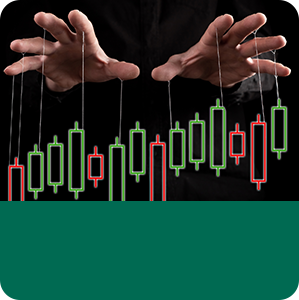
Market Manipulation is explicitly defined as engaging in activities that create false or misleading impressions, distort supply and demand, or artificially influence security prices.

Prohibited Actions
The regulations explicitly prohibit actions such as spreading false information, engaging in deceptive trading practices, and engaging in transactions that disrupt the normal trading of securities.

Penalties
The regulations specify penalties for Market Manipulation, which include fines, suspension from trading, and other measures aimed at preserving market integrity.

Red flags are specific warning signals that are more direct and immediate than indicators. They are specific actions, behaviors, or situations that strongly indicate the likelihood of Market Manipulation. Red flags include:

Indicators are broader signs or cues that suggest the possibility of Market Manipulation. They are general characteristics or circumstances that might raise suspicion but do not necessarily confirm the presence of wrongdoing. Indicators include:
Now that you are familiar with the red flags and indicators, let’s investigate the different forms of Market Manipulation you might need to identify, along with some examples of them in action.
Select each practice to learn more.
This involves spreading false or misleading information about a listed company to influence its stock price.
For example, an individual posts fake news online, falsely claiming a listed company is facing financial difficulties. This causes panic selling among investors, leading to a sharp decline in the company's stock price.
Painting the tape involves engaging in a large number of trades to create the illusion of increased trading activity and attract other investors.
For instance, a group of traders repeatedly buy and sell a security among themselves at slightly higher prices, creating the impression of high demand. This entices other investors to join in, driving up the stock price.
Wash trading refers to simultaneously buying and selling a security to create fake trading volume and manipulate its price.
Consider this example, an individual buys and sells a stock multiple times with the same trading partner to inflate trading volume, giving the appearance of increased market interest.

Let’s start by exploring the Mobily Insider Trading and Market Manipulation case of 2014.
Select each tab to learn more.
In 2015, significant accounting discrepancies were discovered within Etihad Etisalat, commonly known as Mobily, from 2013 to 2015.
These discrepancies were deliberate manipulations that led to a restatement of 18 months of earnings, causing a sharp decline in the company's profits by SAR 1.43 billion for the year 2013 and the first half of 2014. The revelation had a profound impact on Mobily's stock price, causing it to plummet drastically.
Before these accounting errors were publicly announced, several individuals, including Abdulaziz, the former chairman, and his son, Hisham, began trading shares based on this insider information. Their actions, combined with those of other key players like Mohammed and his son, Faisal, indicated clear Insider Trading activities.
These individuals managed to avoid significant financial losses by acting on this non-public material information, while many unsuspecting investors faced substantial losses due to the sudden drop in stock price.

On the 3rd of November 2014, Mobily publicly disclosed accounting errors affecting its 2013 and 1st half of 2014 financial statements, stemming from revenue recognition mistakes and issues with its fibre-optic network leasing.
Mobily's stock price declined by approximately 26.83% within a week of the announcement.

Due to their actions, the men involved were in violation of a number of laws, specifically:

All of the men involved were brought to justice and received a range of penalties:

Next, we’ll investigate the Insider Trading scandal that took place at Walaa Cooperative Insurance in 2016.
Select each button to learn more.
In 2016 Walaa Cooperative Insurance reported a net profit of SAR 20,410,000 for the first quarter. This was in stark contrast to their loss of SAR 8,972,000 in the same quarter of 2015, representing a change rate of 74.59%.
This significant change in financial health indicated a substantial shift in the company's performance. Prior to the public announcement of the financial results Abdulah, a member of the board of directors, had access to non-public information regarding the company's positive financial turnaround.
Acting on this inside information, Najlaa, his sister-in-law, and Maryam, his mother, made trades to capitalize on the forthcoming positive announcement.

On the 18th of April 2016, the company's stock price was SAR 8.42. Following the announcement of the positive financial results on the 1st of May 2016, the stock price soared to SAR 9.78 by the end of the same day. This represented an increase of approximately 16.15%.
The stock continued to experience volatility in the subsequent days, reflecting the market's reaction to the announcement.

The parties involved violated Article (50) of the Capital Market Law and Articles (5) and (6) of the Market Conduct Regulations.

The parties involved were brought to justice and faced a range of penalties:

Let’s finish up this section by reviewing the Weqaya Takaful Insider Trading Case of 2014.
Select each tab to learn more.
During a board meeting on May 26th, 2014, Weqaya Takaful announced a substantial SAR 44,000,000 decrease in financial claims for the year ending December 31st, 2014, indicating a probable shift in the company's financial health.
Privy to this inside information, board members Ahmad and Ali acted swiftly, selling large portions of their company shares before the information was disclosed to the public. Specifically:

On the 3rd of June 2014, the Saudi Arabian Monetary Agency (SAMA) announced that Weqaya Takaful had accumulated losses of 97% of its share capital. The revelation caused an immediate 2.37% drop in the stock price.
The situation worsened as trading of Weqaya Takaful's shares was suspended indefinitely on 4th of June 2014, creating significant uncertainty among investors.

Both men received convictions for violating:
They both used insider information gained from their membership of the board of directors, to trade Weqaya Takaful’s stock.

For their roles in the illegal trading both men were punished:

Let’s review the key takeaways from this training.
Select each topic to learn more.

The two main threats to Market Integrity are Insider Trading and Market Manipulation.
To prevent and safeguard against these threats, the Capital Market Law and Market Conduct Regulations have been put in place.
You can also promote integrity by ensuring proper handling of MNPI to prevent sensitive information being misused and damaging the integrity of the market.
We all have a duty to prevent Insider Trading.
This means we must avoid trading based on inside information and disclosing it to unauthorized individuals.
Doing so can impact the price or value of certain securities.
Recognizing the red flags and warning signs early on, can ensure Insider Trading is caught before it's too late.
It's crucial that we are all proactive in stopping Market Manipulation.
We must avoid spreading false information, engaging in deceptive trading practices, and engaging in transactions that disrupt the normal trading of securities.
Not doing so can lead to false or misleading impressions, distorted supply and demand, or artificially influenced security prices.
Recognize the red flags and warning signs, and make sure you are familiar with everyday examples of manipulation in action.

Which of the following best describes Insider Trading?
Select the correct answer and then select submit.
That's correct
Insider Trading is defined as “Trading based on confidential, non-public information.”
Not quite.
Insider Trading is defined as “Trading based on confidential, non-public information.”
Not quite.
Insider Trading is defined as “Trading based on confidential, non-public information.”
That is correct.
That is not correct.
That is not correct.
Which of the following best describes MNPI?
Select the correct answer and then select submit.
MNPI is confidential information that can impact stock prices if disclosed.
Not quite.
MNPI is confidential information that can impact stock prices if disclosed.
Not quite.
MNPI is confidential information that can impact stock prices if disclosed.
That is correct.
That is not correct.
That is not correct.
Which of the following scenarios is a potential violation of the Capital Market Law and the Market Conduct Regulations?
Select the correct answer and then select submit.
An employee buying shares after learning that a listed corporate client is about to secure a significant overseas contract would be considered a violation of Capital Market Law and the Market Conduct Regulations.
Not quite.
An employee buying shares after learning that a listed corporate client is about to secure a significant overseas contract would be considered a violation of Capital Market Law and the Market Conduct Regulations.
Not quite.
An employee buying shares after learning that a listed corporate client is about to secure a significant overseas contract would be considered a violation of Capital Market Law and the Market Conduct Regulations.
That is correct.
That is not correct.
That is not correct.
Which of the following is NOT a general sign of concern (indicator) for Insider Trading?
Select the correct answer and then select submit.
Indicators for Insider Trading include:
Not quite.
Indicators for Insider Trading include:
Not quite.
Indicators for Insider Trading include:
That is correct.
That is not correct.
That is not correct.
Which of the following scenarios can be considered legal?
Select the correct answer and then select submit.
It’s perfectly legal for a trader to buys shares based on any information that’s been publicly announced.
Not quite.
It’s perfectly legal for a trader to buys shares based on any information that’s been publicly announced.
Not quite.
It’s perfectly legal for a trader to buys shares based on any information that’s been publicly announced.
That is correct.
That is not correct.
That is not correct.
Which of the following best describes the term "tipping" in the context of Insider Trading?
Select the correct answer and then select submit.
Tipping is defined as “sharing material non-public information with someone who then trades on that information.”
Not quite.
Tipping is defined as “sharing material non-public information with someone who then trades on that information.”
Not quite.
Tipping is defined as “sharing material non-public information with someone who then trades on that information.”
That is correct.
That is not correct.
That is not correct.
According to the Capital Market Law, which of the following individuals would be considered an "insider"?
Select all that apply and then select Submit.
The journalist would not be considered an insider as they do not have access to any non-public information.
Not quite.
The journalist would not be considered an insider as they do not have access to any non-public information.
Not quite.
The journalist would not be considered an insider as they do not have access to any non-public information.
That is correct.
That is not correct.
That is not correct.
Which of the following are considered immediate warning signals of potential Insider Trading?
Select all that apply and then select Submit.
These are all considered immediate warning signs of Insider Trading.
Not quite.
These are all considered immediate warning signs of Insider Trading.
Not quite.
These are all considered immediate warning signs of Insider Trading.
That is correct.
That is not correct.
That is not correct.
If two employees synchronize their trading activities, especially before significant corporate announcements, this could be indicative of:
Select the correct answer and then select submit.
Synchronize trading activities before significant corporate announcements is a sign of coordinated Insider Trading based on non-public information.
Not quite.
Synchronize trading activities before significant corporate announcements is a sign of coordinated Insider Trading based on non-public information.
Not quite.
Synchronize trading activities before significant corporate announcements is a sign of coordinated Insider Trading based on non-public information.
That is correct.
That is not correct.
That is not correct.
An employee who has a close relationship with a listed corporate client and frequently trades in that client's securities, especially before major announcements, is most likely:
Select the correct answer and then select submit.
An employee trading in the stock of a client they have a close relationship with is most likely engaging in Insider Trading. This especially applies if the trading is done before public announcements.
Not quite.
An employee trading in the stock of a client they have a close relationship with is most likely engaging in Insider Trading. This especially applies if the trading is done before public announcements.
Not quite.
An employee trading in the stock of a client they have a close relationship with is most likely engaging in Insider Trading. This especially applies if the trading is done before public announcements.
That is correct.
That is not correct.
That is not correct.
An employee who has never traded in stocks suddenly starts trading in stock of the company that they work for, especially before public announcements on Tadawul. The trades are made through multiple brokerage accounts. This is concerning because:
Select the correct answer and then select submit.
The employees behaviour should raise suspicion of Insider Trading. Trading through multiple brokerage accounts makes it appear as though the employee is trying to hide the Insider Trading.
Not quite.
The employees behaviour should raise suspicion of Insider Trading. Trading through multiple brokerage accounts makes it appear as though the employee is trying to hide the Insider Trading.
Not quite.
The employees behaviour should raise suspicion of Insider Trading. Trading through multiple brokerage accounts makes it appear as though the employee is trying to hide the Insider Trading.
That is correct.
That is not correct.
That is not correct.
An executive employee learns about a potential acquisition that could increase the company's stock price. They then purchase a significant amount of stock before the public announcement. This action is:
Select the correct answer and then select submit.
Purchasing any stock with information that’s not yet been made public is a violation of Insider Trading regulations.
Not quite.
Purchasing any stock with information that’s not yet been made public is a violation of Insider Trading regulations.
Not quite.
Purchasing any stock with information that’s not yet been made public is a violation of Insider Trading regulations.
That is correct.
That is not correct.
That is not correct.
Which of the following actions is a proper way to handle MNPI?
Select the correct answer and then select submit.
MNPI should always be kept confidential until it's publicly disclosed.
Not quite.
MNPI should always be kept confidential until it's publicly disclosed.
Not quite.
MNPI should always be kept confidential until it's publicly disclosed.
That is correct.
That is not correct.
That is not correct.